Direct Factory Supply for Commercial Contracting & High-Volume Wholesale
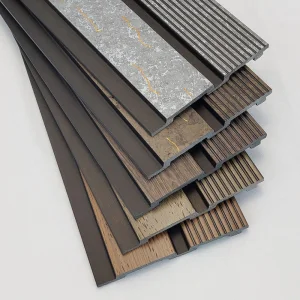
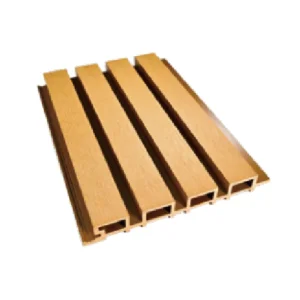
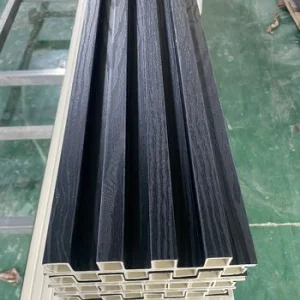
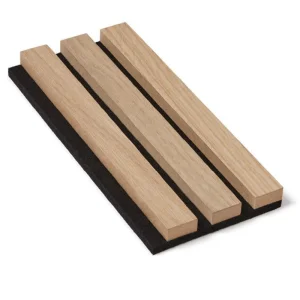
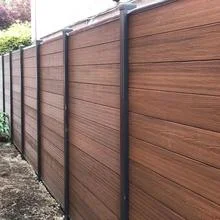
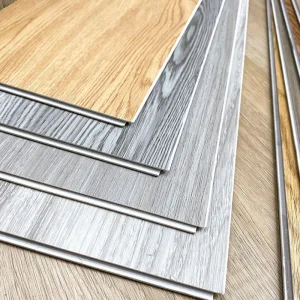
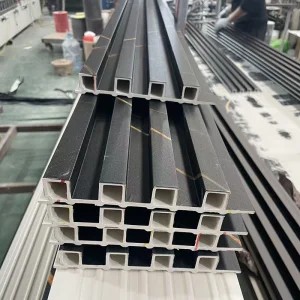
Polystyrene (PS) wall panels represent a paradigm shift in modern architectural surface engineering and interior wall cladding. Extruded through high-precision thermal expansion processes using High-Impact Polystyrene (HIPS) and Expanded Polystyrene (EPS), PS panels offer an unparalleled equilibrium between structural lightness, dimensional stability, moisture imperviousness, and detailed aesthetic reproduction. As commercial real estate developers, interior contracting conglomerates, and global building material distributors increasingly demand sustainable alternatives to traditional timber and natural marble, evaluating premier PS Wall Panels Manufacturers & Factories becomes a strategic procurement imperative.
Unlike conventional wood-plastic composites (WPC) or pure PVC sheets, high-grade PS wall panels engineered by tier-one manufacturers utilize dynamic micro-cellular foaming technologies. This proprietary polymer formulation delivers a uniform internal core density (ranging from 0.35 to 0.55 g/cm³), guaranteeing high flexural modulus while drastically reducing transit weight and installation labor overhead.
Through thermoforming micro-extrusion, PS wall panels achieve hyper-realistic 3D grain depth via hot-stamping foil transfers, metallic film vacuum layering, and digital UV-curable protective topcoats. The result is a 100% recyclable, zero-formaldehyde interior paneling solution that is impervious to fungal degradation, structural warping, and water absorption (absorption rate <0.1%).
Linyi Rich New Materials Co., Ltd. stands as a premier modernized industrial and trading enterprise, fully integrating advanced material research & development, automated precision manufacturing, and direct global supply channels. Headquartered in Linyi City, Shandong Province—China's primary industrial manufacturing hub for synthetic building materials—the company operates a state-of-the-art intelligent manufacturing complex spanning over 100,000 square meters, powered by a specialized workforce of more than 300 professional engineers and senior technicians.
To satisfy non-linear global supply commitments across residential, hospitality, and mega-scale infrastructure projects, Linyi Rich New Materials Co., Ltd. has deployed multi-disciplinary production verticals equipped with automated German-engineered extrusion machinery, dust-free thermocompression workshops, and inline visual defect scanning systems:
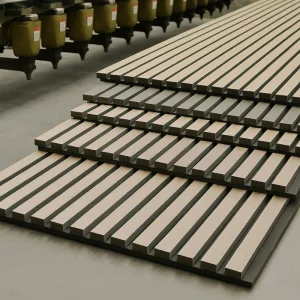
Operates 6 specialized automated extrusion lines backed by over 200 precision molds capable of replicating intricate fluted profiles, acoustic louvers, and bespoke architectural moldings.
Houses 120 fully automated production lines generating an annual output exceeding 12 million square meters, blending natural wood cellulose aesthetics with polymer resilience.
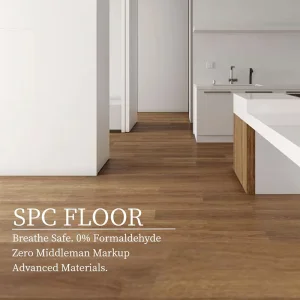
Utilizes 4 high-precision automated manufacturing lines yielding roughly 3 million square meters annually featuring zero-formaldehyde stone-plastic matrix cores.
Features 40 customized heavy-duty lines with an annual capacity of 2 million square meters engineered specifically to withstand UV degradation and severe climate swings.
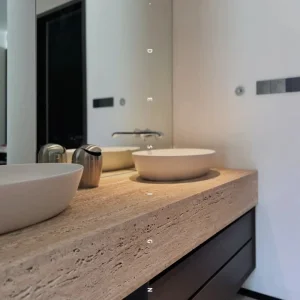
Supported by 12 customized lines operating within dust-free cleanrooms, yielding 6 million square meters annually of high-gloss protective marble-look cladding.
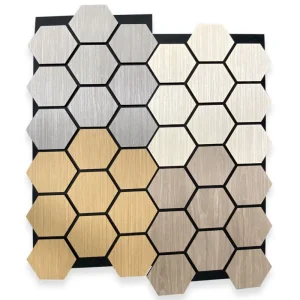
Includes 6 carbon fiber composite lines (1M sqm/yr) and specialized acoustic slat production integrated with proprietary multi-axis CNC routing equipment.
Architects, procurement directors, and structural engineers must evaluate interior cladding materials based on objective performance benchmarks. Below is a comprehensive material science comparison highlighting physical properties, fire ratings, environmental compliance, and structural applications.
| Material Property / Criterion | PS (Polystyrene) Panels | WPC (Wood Plastic Composite) | SPC (Stone Plastic Composite) | Soft Stone Veneer |
|---|---|---|---|---|
| Primary Polymer / Composition | High-Impact Polystyrene (HIPS/EPS) | Wood Flour + PVC / HDPE Polymer | Natural Limestone Powder + PVC Resin | Modified Mineral Powder + Polymer Mesh |
| Average Density Range | 0.35 – 0.55 g/cm³ (Lightweight) | 0.80 – 1.20 g/cm³ (Moderate) | 1.90 – 2.10 g/cm³ (Heavy) | 1.10 – 1.40 g/cm³ (Flexible) |
| Water & Moisture Resistance | 100% Waterproof (Zero Swelling) | High (Minor swelling over extended submergence) | 100% Waterproof & Impervious | Waterproof & Vapor Breathable |
| Formaldehyde & VOC Emission | Zero Formaldehyde (E0 / TVOC Free) | Ultra-Low (E0 Standard) | Zero Formaldehyde (FloorScore Certified) | Zero VOC / Non-Toxic |
| Surface Finishes & Aesthetics | High-Definition Foil / 3D Hot Stamping | Co-extrusion Wood Grain / Embossed | UV Coated Stone/Wood Prints | Natural Mineral Texture / Slate |
| Fire Retardancy Standard | Class B1 (Flame Retardant additive optional) | Class B1 / B2 Standard | Class B1 / Non-combustible core | Class A Fireproof Rating |
| Installation Complexity | Ultra-Fast (Nail-free adhesive / tongue-groove) | Moderate (Requires metal clip fasteners) | Click-lock or Direct Glue Down | Specialized Flexible Adhesive |
China, particularly Shandong Province and the Linyi industrial ecosystem, commands over 70% of the world’s synthetic interior wall panel production. The competitive advantage offered by Chinese PS Wall Panels Manufacturers is not merely anchored in unit-cost optimization, but in deep vertical supply chain integration, raw material synthesis, and rapid custom tooling cycles.
Chinese factories benefit from immediate proximity to premier global petrochemical refiners, securing virgin and high-purity recycled Polystyrene resins at stabilized cost baselines. Furthermore, the localized cluster of thermal hot-stamping foil manufacturers allows PS panel factories to deploy thousands of wood grain, metallic, marble, and tactile matte patterns with zero supply chain latency.
With fully equipped in-house CNC toolmaking shops, manufacturers like Linyi Rich New Materials can transition from architectural CAD drawings to physical PS panel profile prototypes in under 14 days. Whether your project requires intricate 3D fluted slats, concave acoustic waves, or extra-wide ceiling louvers, Chinese factories offer unparalleled custom mold agility.
Operating dedicated production facilities with dozens of automated extrusion lines allows continuous 24/7 manufacturing cycles. Advanced optical sensors and automated thickness gauge monitors eliminate human error, ensuring consistent profile alignment, wall thickness tolerances within ±0.15mm, and perfect tongue-and-groove joint mating.
Leading Chinese PS factories lead global environmental stewardship initiatives by utilizing post-industrial Expanded Polystyrene (EPS) foam scrap. By pelletizing and re-extruding EPS into high-density decorative profiles, factories divert thousands of tons of plastic waste from landfills while achieving ISO14001 green product certifications.
PS wall panels are engineered to solve diverse architectural challenges across residential, commercial, and institutional build-outs. Their structural lightness and imperviousness to humidity make them uniquely suited for environments where traditional drywall or wood paneling fails.
Ideal for feature accent walls behind headboards, reception backdrops, and elevator foyers. PS panels offer pristine luxury aesthetics with minimal maintenance and high impact resistance against luggage carts.
Provides rapid partition dressing and visual depth. When combined with sound-absorbing felt backing, PS fluted slats significantly improve room acoustics and speech intelligibility during videoconferencing.
From living room TV background walls to master bedroom wainscoting and hallway paneling, PS profiles install directly over existing tile or drywall without requiring structural reinforcement.
In regions with high relative humidity (e.g., Southeast Asia, Middle East coastal cities, Latin America), natural wood rots and MDF swells. PS wall panels provide zero moisture absorption and complete mold prevention.
Enables rapid brand deployment with uniform visual merchandising standards across hundreds of retail locations worldwide, dramatically shortening store fit-out times.
Easy-to-disinfect non-porous surfaces that resist clinical detergents, preventing bacterial accumulation in waiting areas, corridors, and consultation rooms.
The global interior wall cladding market is undergoing rapid evolution driven by changing environmental regulations, labor shortages, and digital printing breakthroughs. Forward-thinking PS Wall Panels Manufacturers are capitalizing on several key macro trends:
Next-generation thermal transfer foils no longer just print color; they press microscopic physical textures that perfectly align with visual wood grains, metallic sheens, or stone striations. This EIR (Embossed In Register) technology renders PS panels visually indistinguishable from solid timber or natural travertine.
Modern commercial specifications require wall cladding to actively reduce reverberation times (RT60). Premier factories are co-extruding PS profiles directly onto recycled PET felt backing, creating integrated thermal-acoustic panels that achieve Noise Reduction Coefficients (NRC) up to 0.85.
With the European Union's Carbon Border Adjustment Mechanism (CBAM) and strict global ESG reporting, manufacturers are increasing post-consumer recycled (PCR) PS content to over 80%, certifying closed-loop supply chains without compromising flexural strength.
To bypass the need for solvent-based adhesives and heavy nail guns, factories are engineering multi-stage mechanical interlocks directly into the extruded PS profile, reducing installation labor costs by up to 60%.
Procuring PS wall panels in container-load quantities requires rigorous quality control (QC) frameworks to ensure cross-batch color consistency, profile dimensional accuracy, and transit protection. B2B buyers must enforce standard operating procedures across five critical checkpoints:
Verification that raw HIPS resin meets consistent density (0.35–0.50 g/cm³) and thermal stability parameters. Excessive filler ratios lead to brittle panels prone to cracking during cutting.
Subjecting hot-stamped surface foils to standard ASTM D3359 cross-hatch tape peel tests to guarantee zero lamination peeling even in extreme temperature fluctuations during ocean freight.
Exposing samples to 60°C heat testing for 24 hours to measure linear thermal expansion. Premium PS panels maintain thermal shrinkage/expansion coefficients below 0.05%.
Utilizing heavy-duty 5-ply corrugated master cartons with reinforced corner edge protectors and moisture-barrier PE shrink wrapping to prevent flex distortion inside shipping containers.
Technical guidance and answers to common inquiries from architects, importers, and procurement directors.
PS wall panels are lightweight, highly flexible, 100% synthetic polymer panels extruded from High-Impact Polystyrene. They excel in high-definition surface finishes via hot-stamping foils and offer zero moisture absorption. WPC panels contain natural wood flour mixed with polymer resins, making them denser and heavier, suitable for both indoor and heavy outdoor decking applications. PS is generally preferred for refined interior decorative profiles and rapid installation.
High-quality PS wall panels engineered by tier-one factories exhibit exceptional dimensional stability between -10°C and +50°C. Because PS is completely hydrophobic, relative humidity or direct surface water will not cause warping, rotting, or fungal growth, making them ideal for coastal environments and air-conditioned commercial spaces.
Importers should demand ISO9001 (Quality Management), ISO14001 (Environmental Management), CE certification for European compliance, SGS or Intertek test reports for VOC/Formaldehyde emissions (E0 standard), and ASTM E84 / EN 13501-1 fire retardancy ratings (Class B1).
Yes. Due to their rigid structural backing and lightweight composition, PS wall panels can be installed directly over existing ceramic tiles, concrete, or plywood using heavy-duty nail-free polyurethane adhesive or silicone sealants. Minor wall irregularities are bridged naturally by the panel's structural integrity.
Standard factory MOQs typically range from 500 to 1,000 square meters per profile and colorway. Lead times for standard running profiles are generally 10 to 15 days per 40ft High Cube container, while custom mold creation and sample approval require an additional 10 to 14 days.
Linyi Rich New Materials utilizes automated spectrophotometer color matching during the thermal foil lamination process. Master batches of hot-stamping foils are reserved per project order code to guarantee batch-to-batch visual uniformity under Delta E < 0.8 color variance parameters.
Complete OEM & ODM Portfolio from Linyi Rich New Materials Co., Ltd.
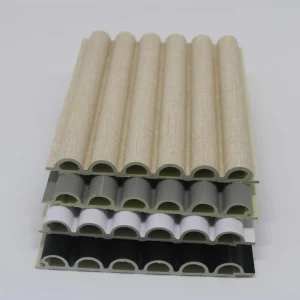
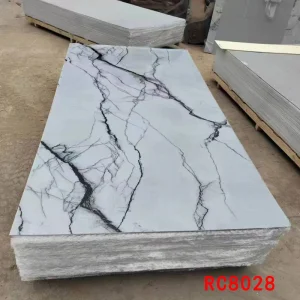
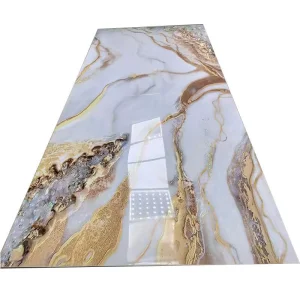
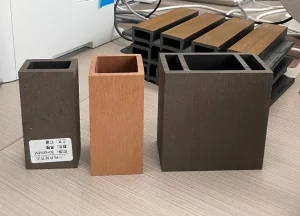
Whether you are sourcing custom PS wall panels for commercial construction, establishing localized distribution lines, or seeking reliable OEM/ODM capacity in China, our technical engineering team is ready to deliver tailored material solutions.
Request Technical Datasheets & Factory Quotation Rich New Materials