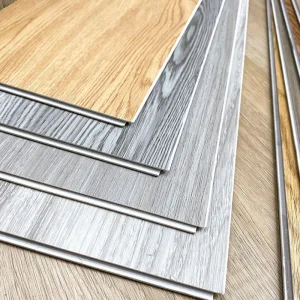
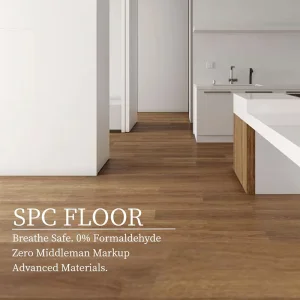
Kuwait’s architectural landscape is undergoing an unprecedented modernization drive, guided by the national vision of "New Kuwait" (Vision 2035). Massive infrastructure projects, mega-residential developments (such as the South Al-Mutlaa and East Sabah Al-Ahmad residential cities), commercial sky-scrapers in Kuwait City, and luxury healthcare facilities demand interior building materials engineered to survive some of the world's most severe climatic stresses. Central to this interior evolution is the rapid phase-out of traditional timber, low-density vinyl (LVT), and fragile ceramic tiles in favor of high-performance Stone Plastic Composite (SPC) Flooring.
Operating in Kuwait presents distinct engineering challenges. With summer ambient shade temperatures consistently exceeding 50°C (122°F) and direct surface solar loading reaching up to 70°C, building envelopes undergo intense thermal cycles. Furthermore, high air conditioning utilization creates extreme temperature differentials between outdoor micro-climates and interior spaces. Standard flooring materials often succumb to warping, joint separation, plasticizer migration, and surface fading. Direct-from-factory SPC flooring engineered specifically with high calcium carbonate ($CaCO_3$) ratio cores, specialized dual-UV cross-linked coating layers, and integrated acoustic dampeners solves these systemic environmental vulnerabilities.
Globally, the resilient flooring sector has fundamentally shifted from traditional flexible Luxury Vinyl Tile (LVT) and Wood Plastic Composite (WPC) toward Rigid Core SPC. The core advantage of SPC flooring lies in its co-extruded polymer-stone matrix. Manufactured without chemical plasticizers through heat-fusion extrusion, high-grade SPC integrates pure limestone powder, polyvinyl chloride (PVC) resin, and non-toxic heat stabilizers.
To ensure zero structural degradation under Middle Eastern desert conditions, tier-one manufacturers utilize a rigid multi-layer co-extrusion and lamination process:
The international supply chain is increasingly reliant on highly automated, smart manufacturing facilities capable of producing millions of square meters annually with sub-millimeter milling tolerances for click-locking systems (Unilin or Valinge patent profiles).
Leading the global export strategy for modern building materials is Linyi Rich New Materials Co., Ltd., a modernized industrial and trading enterprise integrating continuous research and development, smart extrusion manufacturing, and direct global distribution. Headquartered in the manufacturing hub of Linyi City, Shandong Province, the enterprise operates an intelligent manufacturing footprint serving over 100 countries including key Middle Eastern infrastructure hubs.
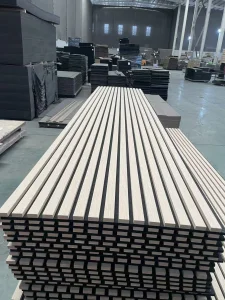
The company’s smart production base spans an impressive 100,000 square meters and employs over 300 professional technicians and polymer engineers. The production infrastructure includes specialized divisions designed for high-precision output:
By strictly adhering to the ISO9001 Quality Management System and fulfilling international environmental standards (such as European CE, Greenguard Gold, and FloorScore certifications), Linyi Rich New Materials Co., Ltd. provides Kuwaiti contractors, importers, and project developers with direct factory pricing, zero-defect quality guarantees, and tailored OEM/ODM solutions.
SPC flooring is not a one-size-fits-all product; its selection must align with specific Kuwaiti architectural typologies and indoor environmental demands:
In areas like Al-Zahra, Salwa, and Sabah Al-Salem, private villas utilize large-format SPC planks and herringbone tiles over underfloor cooling setups. The dimensional stability ensures zero gaps form even when air conditioning is powered down during travel seasons.
Commercial developments along the Salmiya retail strip and Kuwait City financial centers demand minimum 0.55mm wear layers. SPC resists high heel indents, heavy wheeled cart loads, and abrasive desert sand tracked in from foot traffic.
Hospitals in Jabriya and educational campuses require zero-formaldehyde environments. SPC’s stain-resistant, anti-bacterial UV coating enables seamless cleaning with medical-grade disinfectants without dulling the finish.
The comparative table below illustrates why Kuwaiti architects and structural engineers are increasingly specifying Stone Plastic Composite over traditional alternatives:
| Performance Characteristic | Rigid Core SPC Flooring | Porcelain / Ceramic Tile | Solid Hardwood | Traditional Dry-Back LVT |
|---|---|---|---|---|
| Thermal Expansion (60°C Heat) | Very Low (≤0.05%) | Minimal (Rigid) | Extremely High (Warps/Cracks) | High (Telescoping/Bubbling) |
| 100% Water Immersion Resistance | Impervious (0% Swell) | Impervious | Severe Damage/Rot | Medium (Glue failure) |
| Acoustic Insulation (With IXPE) | Excellent (18 - 21 dB) | Poor (Echo/Loud) | Moderate | Poor |
| Installation Speed & Cost | Fast (Click System) | Slow & Expensive Wet Subfloor | Slow & Labor Intensive | Moderate (Glue required) |
| Formaldehyde Emission Level | E0 / Zero Formaldehyde | Zero | Varies (Adhesives) | Low to Moderate |
| Subfloor Imperfection Tolerance | High (Rigid Core Bridge) | Requires Leveling Mortar | Requires Timber Joists | Very Low (Shows all flaws) |
Importing SPC flooring into the State of Kuwait requires strict adherence to customs and technical clearance standards established by the Public Authority for Industry (PAI). Factory shipments entering via Shuwaikh Port or Mubarak Al-Kabeer Port must comply with the Kuwait Conformity Assurance Scheme (KUCAS).
As architectural demands evolve, manufacturing technology is advancing rapidly. Linyi Rich New Materials Co., Ltd. continuously invests in industry-university research to push the technical boundaries of synthetic flooring:
Modern optical alignment presses align the surface micro-texture precisely with the underlying printed wood grain image. The result is an tactile experience virtually indistinguishable from natural aged oak or brushed walnut.
Integrating silver-ion additives into the ultraviolet surface matrix actively neutralizes 99.9% of surface bacteria, making next-gen SPC ideal for modern Kuwaiti medical laboratories and nursery schools.
Next-generation core co-extrusion incorporates microscopic closed-cell honeycomb gas pockets, reducing total plank weight by 15% while improving sound absorption and structural impact resilience.
High-quality SPC flooring features a stone-powder-dominated core ($CaCO_3$) yielding an ultra-low thermal expansion coefficient (≤0.05%). Unlike standard vinyl, it maintains dimensional stability up to 70°C direct surface heat without buckling, warping, or expanding out of its click-lock joint profile.
Yes. Due to its rigid core structure, SPC can bridge minor subfloor imperfections (up to 2mm over 2 meters) without "telescoping" (telegraphed lines). It can be installed directly over existing flat ceramic tiles, terrazzo, or concrete subfloors without requiring expensive floor removal.
For high-traffic commercial environments such as corporate offices, retail stores, and hospitality venues, we recommend a wear layer of at least 0.50mm (20mil) to 0.70mm (28mil) paired with a commercial-grade dual UV surface coating.
Absolutely. SPC core extrusion is a 100% heat-fusion process using zero liquid plasticizers, glues, or benzene derivatives. Our factory products achieve E0 indoor air standards and zero formaldehyde certification, ensuring healthy indoor air quality even when spaces are sealed with AC during summer.
Standard factory production lead time is 14 to 20 days for custom orders. Ocean freight transit from Qingdao/Lianyungang port to Shuwaikh Port or Shuaiba Port in Kuwait typically takes 22 to 28 days. Total turnaround time from order confirmation to port arrival is approximately 35–45 days.
Yes, Linyi Rich New Materials Co., Ltd. provides full OEM/ODM services. We can match custom interior designer color swatches, produce specialized plank sizes (including large format 9"x60" or 12"x24" stone tiles), print custom buyer logo cartons, and pre-attach customized acoustic IXPE underlayments.
Because the internal density of our SPC core exceeds 2,000 kg/m³, its static indentation resistance is superior to LVT or traditional vinyl. Heavy wardrobes, office desks, and medical equipment leave virtually zero residual indentation (tested according to EN 433 standards).
No special wax or polish is required. The non-porous ceramic bead UV wear layer prevents dirt penetration. Routine cleaning with a damp microfiber mop and standard neutral pH floor detergent is sufficient to maintain appearance for decades.
Get engineered SPC flooring samples delivered directly to your office in Kuwait. Our technical export sales team provides localized project estimates, KUCAS certification guidance, and container optimization strategies.
 Rich New Materials