Engineered to meet European Union construction standards, high-traffic commercial durability, and severe micro-climate interior requirements.
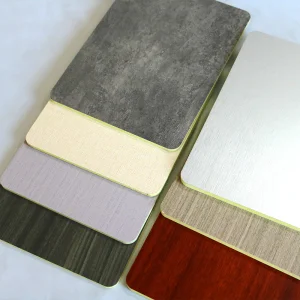
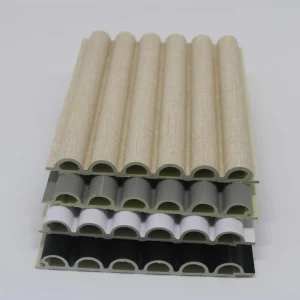
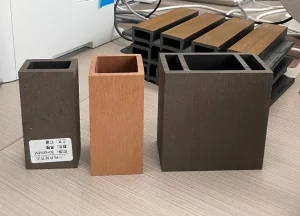
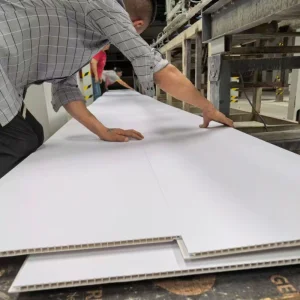
Hungary's architectural scene is experiencing a profound structural transition. Driven by massive urban revitalization projects across Budapest (such as the Váci Út office corridor and the historic District VII adaptive reuse projects), expanding logistics clusters along the M0 ring road, and the boom in thermal spa hotel refurbishments around Lake Balaton and Hevíz, interior designers and general contractors are demanding advanced, sustainable surface solutions.
Traditional interior cladding materials like natural wood veneer, standard MDF board, and traditional gypsum plasterboard are increasingly showing limitations when subjected to the micro-climatic dynamics of Central Europe. Hungary experiences significant seasonal humidity shifts—from dry, intensely heated winter indoor environments (relative humidity dropping below 30%) to humid summer conditions (relative humidity exceeding 75%). Standard wooden panels are vulnerable to linear thermal expansion, warping, joint splitting, and formaldehydic off-gassing under heat. Furthermore, Hungary's strict fire compliance regulations aligned with EU standard EN 13501-1 necessitate non-combustible or fire-retardant interior wall coverings for commercial spaces.
Hungary boasts over 1,300 thermal springs. Indoor spa facilities, wellness hotels, and aquatic centers require wall systems with 100% moisture resistance and zero mold propagation risk. Bamboo charcoal wood veneers utilize a dense hydrophobic co-extruded core that remains entirely dimensionally stable in environments with constant vapor pressure.
Renovating historic brick-and-mortar structures in Budapest often presents uneven masonry walls and legacy dampness issues. Lightweight bamboo charcoal veneer panels can be direct-hung or installed over lightweight aluminum furring, concealing structural flaws while eliminating moisture traps behind walls.
With corporate tenants in Hungary prioritizing BREEAM and LEED certifications for Class-A office buildings, interior materials must satisfy zero-VOC off-gassing standards. Our panels yield zero formaldehydic emissions (E0 Grade), helping developers secure valuable environmental assessment points.
By specifying co-extruded bamboo charcoal wood veneer panels instead of traditional HPL laminates or real wood veneers, Hungarian commercial projects reduce installation downtime by up to 60%, avoid seasonal warping claims, and satisfy European Class B-s1, d0 fire safety codes natively.
Bamboo charcoal wood veneer represents a quantum leap in composite material engineering. Unlike traditional Wood-Plastic Composites (WPC) that simply mix wood flour with PVC resins, our factory utilizes high-temperature (800°C–1000°C) pyrolyzed bamboo charcoal activated powder co-extruded into a high-density polymer matrix.
Each panel is composed of five distinct functional layers bonded via a solvent-free PUR hot-melt lamination process under high pressure:
| Performance Indicator | Bamboo Charcoal Veneer | Natural Wood Veneer | Standard MDF Wall Panel | High-Pressure Laminate (HPL) |
|---|---|---|---|---|
| Moisture Resistance | 100% Waterproof (Zero Swell) | Poor (Warping / Rot Risk) | Very Low (Swells easily) | Moderate (Edge sealing needed) |
| Formaldehyde Release | E0 Grade (Non-detectable) | Varies (Adhesive dependent) | E1 / E2 Grade (Off-gassing) | E1 Grade |
| Fire Safety Rating | EN 13501-1 Class B-s1, d0 | Class D / Combustible | Class D / Combustible | Class C or B (High cost) |
| Bending & Flexibility | High (Grooved corner bending) | Rigid (Breaks easily) | Rigid | Rigid |
| Bacteriostatic Property | Active Charcoal Antibacterial | Prone to Mold / Fungi | Highly Susceptible to Mold | Inert Surface |
Partnering directly with a global leader in new material manufacturing guarantees price competitiveness, rapid production turnaround, and unwavering quality control for European distributors and contractors.
Headquartered in Linyi City, Shandong Province—China's undisputed hub for building material innovation—Linyi Rich New Materials Co., Ltd. operates a modern enterprise ecosystem combining research, precision tooling, production, and international logistics execution.
Our infrastructure includes 120 fully automated WPC grating lines, 4 high-precision SPC flooring lines, 40 customized outdoor composite lines, and dust-free UV coating workshops. For Hungarian buyers, this scale translates into unmatched supply chain stability. Whether fulfilling container-load orders for major wholesale distribution networks in Budapest or supplying custom-cut panels for commercial developments in Debrecen, our factory ensures constant lead times and batch-to-batch color consistency.
By leveraging direct rail shipping via the China-Europe Railway Express (Piraeus port connections or direct rail route to Budapest Csepel Logistics Park), we deliver seamless freight execution directly into Central Europe.
Navigating EU import regulations requires absolute precision in material documentation and environmental safety certification. Linyi Rich New Materials Co., Ltd. operates under full ISO9001 Quality Management System protocol and guarantees that all shipments exported to the Hungarian market fully align with European CE regulations and REACH environmental standards.
Fully compliant with EU Construction Products Regulation (CPR). Guaranteed mechanical performance, hazardous substance exclusion, and health compliance for public building installations.
Tested free of SVHCs (Substances of Very High Concern), phthalates, heavy metals, and plasticizers. Safe for indoor medical facilities, schools, and residential nurseries.
Manufactured under strict ISO quality control and environmental management systems, ensuring full traceability from raw bamboo charcoal processing to ocean packing.
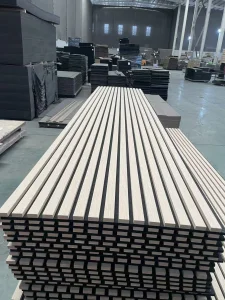
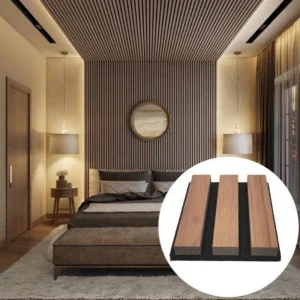
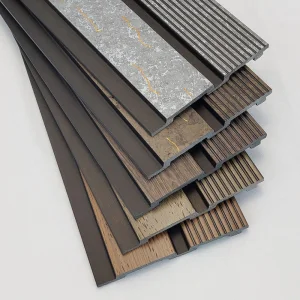
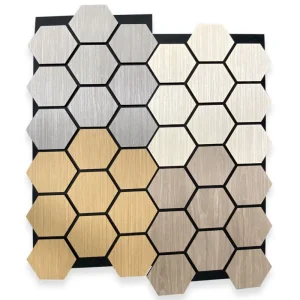
To serve localized architectural preferences in Hungary—such as matte tactile surfaces, synchronized embossed wood textures, or minimalist metallic oxide finishes—our factory provides flexible ODM/OEM engineering options:
Addressing the top commercial, mechanical, and logistical queries from Hungarian interior architects, general contractors, and building material importers.
While standard WPC panels are highly durable, bamboo charcoal wood veneers incorporate a dense micro-porous carbon matrix. This provides two key physical superiorities: first, enhanced thermal stability across Hungary's wide seasonal temperature variations (preventing linear contraction or expansion gaps); second, active indoor humidity regulation and volatile organic compound (VOC) adsorption, making them ideal for modern sealed, energy-efficient HVAC building environments in Hungary.
Our bamboo charcoal veneers achieve an EN 13501-1 Class B-s1, d0 reaction-to-fire classification. This certifies that the material is flame-retardant (Class B), produces minimal smoke under thermal breakdown (s1), and emits zero flaming droplets/particles (d0). This matches Hungary's strict fire safety criteria for escape routes, public administrative spaces, hotels, and retail centers.
Yes. Due to their exceptional structural strength and flexibility, these panels can be bonded directly onto smooth existing ceramic tiles, drywall, or plastered brick using high-tack structural polyurethane adhesive or neutral silicone. For severely uneven masonry walls common in historic Budapest building renovations, installation over lightweight metal furring strips allows rapid leveling without extensive wet plaster prep work.
We provide multiple shipping routes to Hungary. Ocean freight typically ships from Qingdao/Linyi ports to Piraeus, Greece or Koper, Slovenia, followed by direct rail transfer to Budapest container terminals (such as BILK or Csepel), taking approximately 28 to 35 days total transit. Alternatively, direct China-Europe Railway Express freight delivers containers directly to Budapest within 16 to 20 days for urgent project schedules.
No. One of the primary engineering advantages of our bamboo charcoal veneer is its bendability. By slotting a 90-degree V-groove on the reverse side using a standard CNC router or hand trimmer, the panel can be heat-folded around inner and outer corners continuously. This creates a seamless, wrapped aesthetic edge without requiring exposed metal edge trims.
We support growing regional distributors with low trial MOQ options (typically 300 to 500 square meters for standard textures). Express sample books containing complete color swatches, technical data sheets, and certification copies can be dispatched via DHL/FedEx to your office in Hungary within 3 to 5 business days upon request.
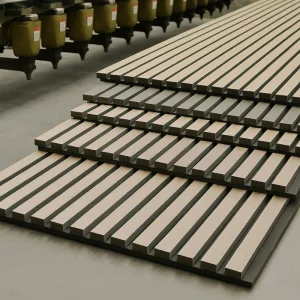
Engineered for high-traffic commercial spaces, acoustics refinement, and premium residential design.
Whether you are a building material importer in Budapest, a real estate developer executing commercial refurbishments, or an architectural firm specifying sustainable materials, contact our technical sales director today for direct factory pricing, sample kits, and customized OEM solutions.
Send Inquiry Now Rich New Materials