Direct Factory Supply for Tokyo Construction Firms, Interior Engineering Contractors, and Commercial Importers.
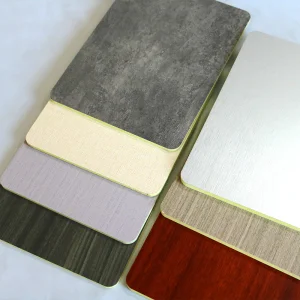
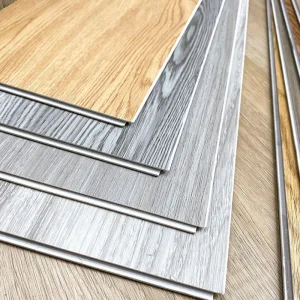
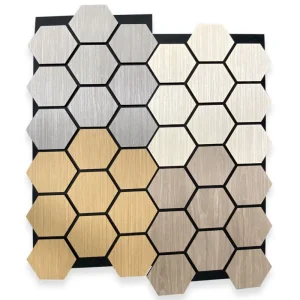
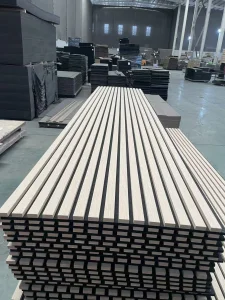
Understanding the strict micro-climate demands, seismic flexibility criteria, and zero-formaldehyde standards driving bamboo charcoal veneer adoption across Greater Tokyo.
Tokyo experiences pronounced seasonal humidity fluctuations—ranging from intense moisture during the summer Tsuyu (rainy season) to sharp winter humidity drops. Traditional real wood veneers installed in districts like Minato or Chiyoda often suffer from delamination, warping, and mold growth. Bamboo charcoal wood veneers incorporate a dense micro-porous carbon matrix that actively balances relative humidity, completely eliminating moisture-induced warping.
Japan’s Ministry of Land, Infrastructure, Transport and Tourism (MLIT) enforces stringent indoor air quality policies under the F☆☆☆☆ standard (formaline emission ≤ 0.12 mg/L). Bamboo Charcoal Wood Veneers manufactured by Linyi Rich New Materials utilize thermal co-extrusion resins without added formaldehyde (NAF), achieving seamless compliance with CASBEE (Comprehensive Assessment System for Built Environment Efficiency) rating points.
Tokyo high-rise commercial structures and residential towers (such as those in Roppongi, Toranomon, and Shibuya) require wall cladding materials capable of absorbing minor structural flexures during seismic events without cracking. Our bamboo charcoal composite core possesses higher flexural elasticity than solid stone or MDF, providing structural safety alongside aesthetic luxury.
In high-density urban developments across Ginza, Shinjuku, and Marunouchi, rapid tenant turnaround and zero downtime are critical. Bamboo Charcoal Wood Veneers support slot-in, tongue-and-groove dry installation, cutting project lead times by up to 45% compared to wet-plaster or conventional timber panel finishing.
A look into the structural layers, bamboo carbon activation process, and fire-retardant performance engineering.
Unlike conventional plywood or standard PVC sheets, our Bamboo Charcoal Wood Veneer panels feature a 5-layer co-extruded composite structure:
| Technical Property | Testing Standard | Performance Metric |
|---|---|---|
| Formaldehyde Emission | JIS A 1460 / EN 717-1 | E0 / F☆☆☆☆ (≤0.05 mg/L) |
| Fire Reaction Class | JIS A 1321 / EN 13501-1 | B-s1, d0 (Flame Retardant) |
| Water Absorption Rate | ISO 62 / JIS K 7209 | < 0.08% (Hydrophobic) |
| Bending Elastic Modulus | JIS K 7171 | ≥ 2800 MPa |
| Thermal Expansion Ratio | ISO 11359 | ≤ 0.03 mm/m·°C |
| Acoustic Absorption (NRC) | ISO 354 (With Slat Backing) | NRC 0.75 - 0.85 |
Linyi Rich New Materials Co., Ltd. delivers direct factory supply, precision engineering, and mass-scale production for large-scale Japanese developments.
Operating 120 fully automated extrusion production lines with an annual capacity of 12 million m². Engineered for consistent batch-to-batch density and dimension accuracy.
Equipped with 4 high-precision extrusion presses generating over 3 million m² annually, offering ultra-thin profiles suitable for modern high-rise load limits.
40 customized weather-resistant lines for outdoor cladding, plus 6 specialized carbon fiber composite lines for precision slotting and structural flexibility.
Customized material profiles designed for specific architectural archetypes within the Greater Tokyo Metropolitan area.
High-end fashion retail interiors demand tactile wood finishes combined with zero-maintenance durability. Bamboo Charcoal Veneers with metal inlay trims create high-end visual appeal without scratching under high foot-traffic conditions.
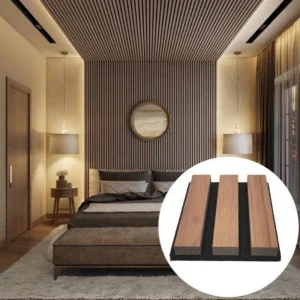
Modern office complexes require sound dampening for conference rooms and open-plan executive suites. Our slat wood acoustic bamboo charcoal panels combine NRC-rated sound absorption with minimalist aesthetic lines.
For high-rise residential projects, weight reduction and indoor air purity are paramount. Bamboo charcoal panels emit zero VOCs, eliminate odor, and feature light dead-load profiles ideal for elevated tower walls.
Ensuring streamlined import processes from factory to Tokyo Port or Yokohama Port with complete Japanese compliance documentation.
Located in Linyi City, Shandong—China’s premier building material manufacturing hub—we provide direct containerized logistics to Port of Tokyo and Port of Yokohama in just 3 to 5 days sea transit time. This short transit allows Tokyo-based developers to maintain Just-In-Time (JIT) inventory management on major interior fit-outs.
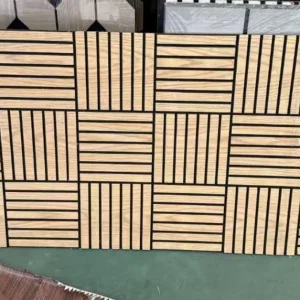
Japanese architectural design prioritizes subtle, natural textures (such as Hinoki wood grain, raw concrete, or subtle metallic luster). We provide complete OEM/ODM support, customizing panel lengths (up to 3.05 meters), surface embossing depth, thickness (5mm to 12mm), and slot-groove geometries.
Direct answers regarding Japanese building codes, installation methodologies, and bulk orders.
Yes. Our co-extruded bamboo charcoal composite panels are formulated with flame-retardant inorganic mineral fillers. They meet European B-s1, d0 standards and can be engineered to pass Japanese non-combustible/semi-non-combustible interior decoration standards under MLIT guidelines.
Bamboo charcoal contains millions of micro-cavities per gram that absorb atmospheric water vapor during high humidity and release it when conditions dry out, maintaining stable internal moisture and preventing panel swell or mold growth.
Absolutely. The panels feature tongue-and-groove or aluminum clips locking mechanisms. They can be installed over drywall, plywood sub-bases, or existing flat wall surfaces using structural adhesive, speeding up renovation in Tokyo commercial rentals.
Standard colors carry low MOQs (from 300 m²). For custom OEM colors, textures, or specific lengths tailored for Tokyo modular buildings, our factory MOQ is typically 1,000 m² per design.
Explore our full line of acoustic, stone-composite, and decorative cladding solutions available for global bulk shipment.
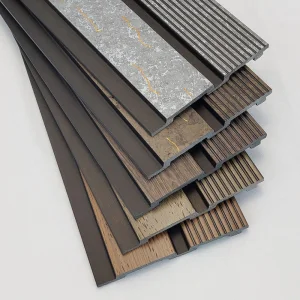
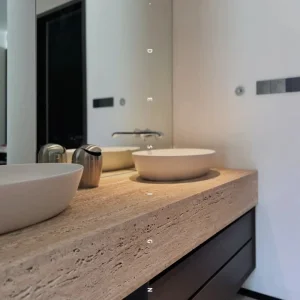
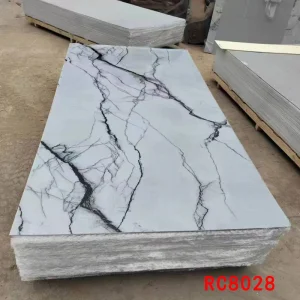
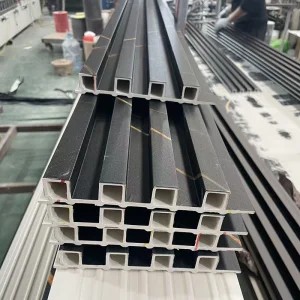
Direct supply, custom engineering, competitive wholesale pricing, and express sample shipping to Tokyo, Osaka, Yokohama, and across Japan.
 Rich New Materials