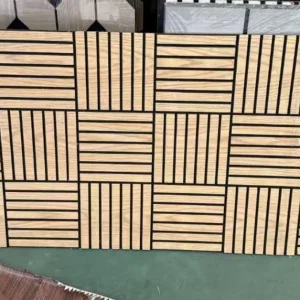
Discover our top-tier export-grade WPC wall panel profiles, acoustic wood assemblies, and co-extruded exterior systems manufactured under strict ISO9001 and CE quality standards.
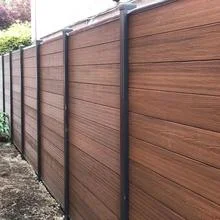
The global demand for high-performance architectural wall claddings has catalyzed a paradigm shift toward Wood-Plastic Composites (WPC). Modern WPC wall panels represent an advanced synergy of material chemistry, combining thermoplastic polymers (such as High-Density Polyethylene [HDPE], Polyvinyl Chloride [PVC], or Polypropylene [PP]) with finely milled lignocellulosic biomass (wood flour, rice husk, or bamboo fibers) and specialized chemical coupling agents.
As leading China WPC Wall Panel Suppliers & Factories, top manufacturing hubs utilize co-rotating twin-screw extrusion systems to achieve complete melt homogenization. By introducing maleic anhydride-grafted polymers (MAP) as compatibilizers, factory chemists eliminate the interfacial energy gap between polar wood fibers and non-polar plastic resins. The resulting composite matrix achieves superior flexural strength, dimensional stability, and near-zero moisture absorption compared to traditional solid timber cladding.
| Performance Metric | 1st Gen Solid Timber | Standard PVC Interior WPC | Co-Extruded Exterior HDPE WPC | Bamboo Charcoal Veneer |
|---|---|---|---|---|
| Density (g/cm³) | 0.55 – 0.70 | 0.85 – 0.95 | 1.25 – 1.40 | 0.90 – 1.10 |
| 24h Water Absorption | 15.0% – 35.0% | < 1.0% | < 0.3% (ASTM D570) | < 0.5% |
| Flexural Modulus (MPa) | 6,000 – 9,000 | 1,800 – 2,400 | 2,800 – 3,500 (ISO 178) | 2,200 – 2,800 |
| Thermal Expansion (10⁻⁵/K) | 3.5 – 5.0 | 4.5 – 6.0 | 2.8 – 3.8 (ASTM D696) | 3.0 – 4.0 |
| Fire Reaction Standard | Class B3 (Combustible) | EN 13501-1 B-s1,d0 | EN 13501-1 B-s1,d0 / ASTM E84 Class A | EN 13501-1 B-s1,d0 |
| Maintenance Cycle | Annual Sanding & Oil | Zero (Wipe Clean) | Zero (UV Protected ASA Shell) | Zero (Anti-microbial) |
The composite materials industry is currently transitioning from basic single-extrusion profiles to multi-layer engineered polymer systems. Understanding this evolutionary trajectory allows global buyers to select long-lasting products engineered for harsh exterior solar exposure or heavy-traffic interior spaces.
Next-gen exterior WPC profiles utilize an acrylic-styrene-acrylonitrile (ASA) or modified fluoropolymer outer cap layer fully encapsulating the core matrix. This shields the wood fiber from moisture ingress, bio-fungal degradation, and intense UV photo-oxidation.
By integrating hindered amine light stabilizers (HALS) and titanium dioxide (TiO2) nano-particles, China WPC manufacturers maintain Delta E (color shift) ratings under 2.0 even after 5,000 hours of accelerated Xenon Arc weathering testing.
Leading factories are replacing virgin petrochemical resins with post-consumer recycled polyolefins (PCR-HDPE) and bio-based polyurethane binders, targeting zero Net-Zero carbon embodied profiles certified by Environmental Product Declarations (EPDs).
Centralized manufacturing hubs like Linyi City, Shandong Province, lead the global industrial capacity for green building products. Standardized automated extrusion infrastructure enables high output rates, uniform dimensional tolerances (within ±0.2mm), and structural stability across large order batches.
Linyi Rich New Materials Co., Ltd. is a modernized industrial enterprise integrating research & development, high-precision extrusion manufacturing, and global trade solutions. Headquartered in Linyi City, Shandong Province, the company’s intelligent plant covers 100,000 square meters and employs over 300 senior technicians.
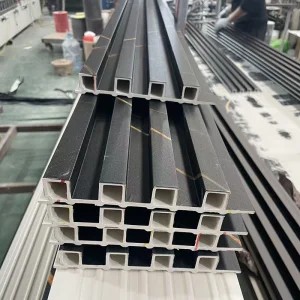
Our infrastructure houses 120 fully automated WPC grating lines (12 million m²/year), 40 outdoor WPC lines (2 million m²/year), 4 SPC flooring lines (3 million m²/year), 12 dust-free UV coating lines (6 million m²/year), and 6 carbon fiber composite panel lines (1 million m²/year). We maintain full in-house engraving, grooving, and acoustic slotting machinery to fulfill tailored engineering specifications.
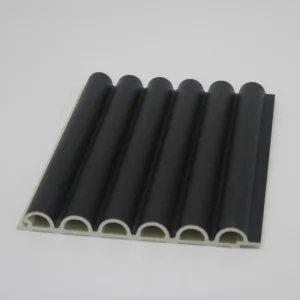
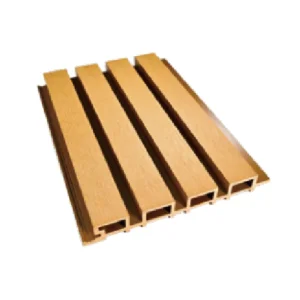
Contact OEM/ODM Engineering Team120 fully automated production lines delivering lightweight, highly durable fluted acoustic and wall profile units for residential and commercial interior spaces.
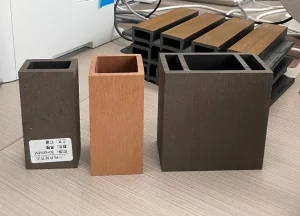
40 specialized high-pressure extrusion lines dedicated to heavy-duty co-extruded exterior wall claddings and decking capable of enduring severe temperatures (-40°C to +65°C).
12 dust-free UV production lines alongside 6 advanced carbon fiber composite lines, providing mirror-finish chemical-resistant surface veneers.
Modern architects choose engineered wood composites to resolve common limitations of natural timber—such as rot, termite infestation, cracking, and high upkeep costs. Below are specialized structural solutions engineered by top China suppliers:
Problem: Hotel interiors, indoor spa zones, and basement lounges suffer from mold, peeling paint, and wallpaper delamination due to relative humidity exceeding 80%.
Solution: Waterproof interior PVC-WPC wall panels engineered with closed-cell micro-foam technology. Zero swelling ensures permanent structural integrity without warping.
Problem: Exterior building facades in tropical regions undergo rapid fading, thermal distortion, and salt-mist corrosion.
Solution: Co-extruded HDPE WPC exterior wall panels integrated with UV-inhibitor cap layers. Tested for salt-spray exposure up to 1,000 hours without surface pitting.
Problem: Echo and reverberation in modern minimalist open-plan offices, conference halls, and home theaters.
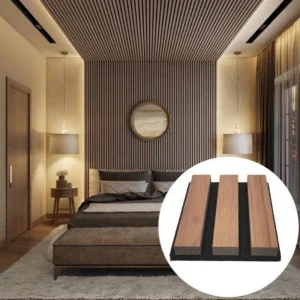
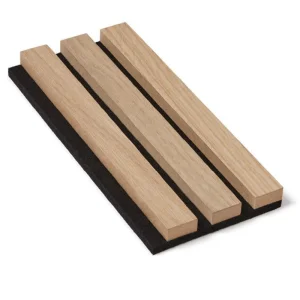
Solution: Custom slatted acoustic wood-composite wall panels bonded to high-density sound-absorbing polyester felt, reaching Noise Reduction Coefficients (NRC) up to 0.85.
Problem: Heavy real stone slabs incur high freight costs, demand structural wall reinforcement, and pose safety risks during installation.
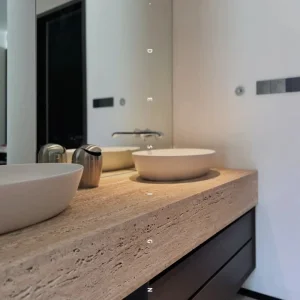
Solution: Flexible soft stone and PU artificial stone veneer sheets providing realistic 3D textures at under 4kg/m², lowering installation overhead by 60%.
Sourcing WPC products requires strict verification of international environmental and structural standards. Reputable China suppliers execute third-party testing via accredited bodies like SGS, Intertek, and TÜV Rheinland to verify compliance across target markets:
EN 13501-1 Class B-s1,d0 & ASTM E84 Class A: Confirms flame-retardant performance, minimal smoke development (s1), and zero flaming droplets/particles (d0).
Formaldehyde E0 / TVOC Emission Standards: Tested via 28-day environmental chamber methods to confirm non-detectable formaldehyde emissions (EN 717-1 / ISO 16000).
REACH SVHC & RoHS Certification: Assures freedom from 230+ substances of very high concern, heavy metals (lead, cadmium, mercury), and hazardous plasticizers (phthalates).
Procuring building materials from OEM factories involves balancing initial purchase costs, container loading efficiency, profile customization expenses, and landed logistics expenses. Below is an engineering framework for commercial purchasing agents:
China factories support custom profile extrusion tooling. Standard tooling setup lead times range from 10 to 15 days, with low minimum order quantities (MOQs) for custom surface embossing and color matching (Pantone / RAL standards).
Standard WPC wall panel lengths (2.8m, 2.9m, 5.8m) are engineered specifically to maximize container space in 20GP and 40HQ configurations, avoiding dead volume and reducing per-unit freight costs.
Heavy-duty multi-layer cardboard packaging combined with corner guards and moisture-barrier PE shrink wrapping protects panel tongue-and-groove joints from transit impact damage.
Explore additional specialty items including custom acoustic panels, UV marble sheets, SPC flooring, and decorative interior profiles.
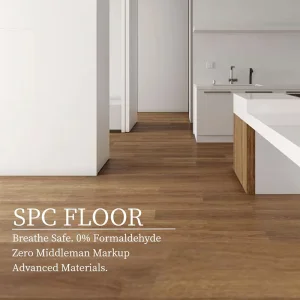
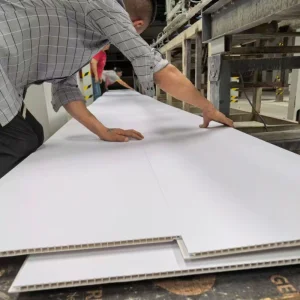
Modern commercial real estate projects require coordinated surface materials across walls, ceilings, and floors. By integrating WPC wall panels with high-gloss UV marble sheets, ultra-durable rigid core SPC flooring, and flexible stone veneers, developers achieve cohesive design aesthetics while reducing procurement complexity.
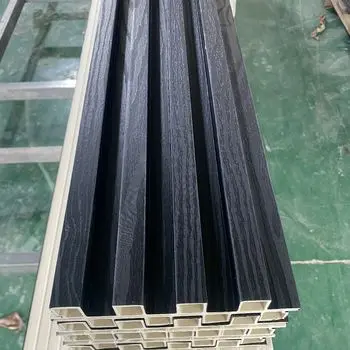
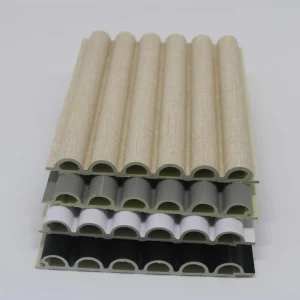
High-density PVC-WPC core for commercial feature walls and lobbies.
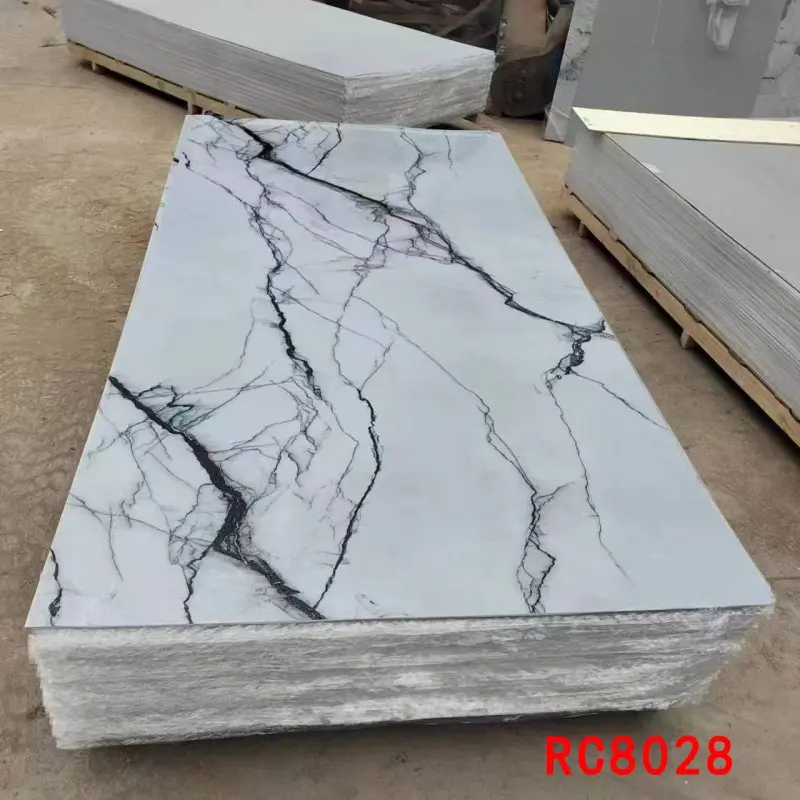
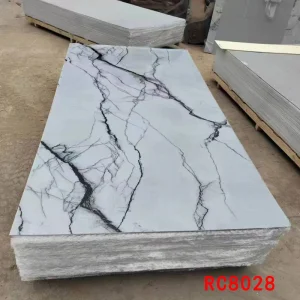
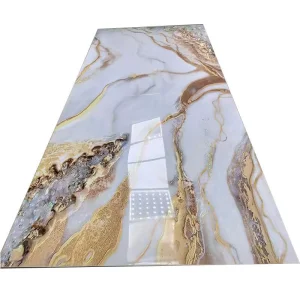
High-gloss marble substitute with anti-scratch UV protective coating.
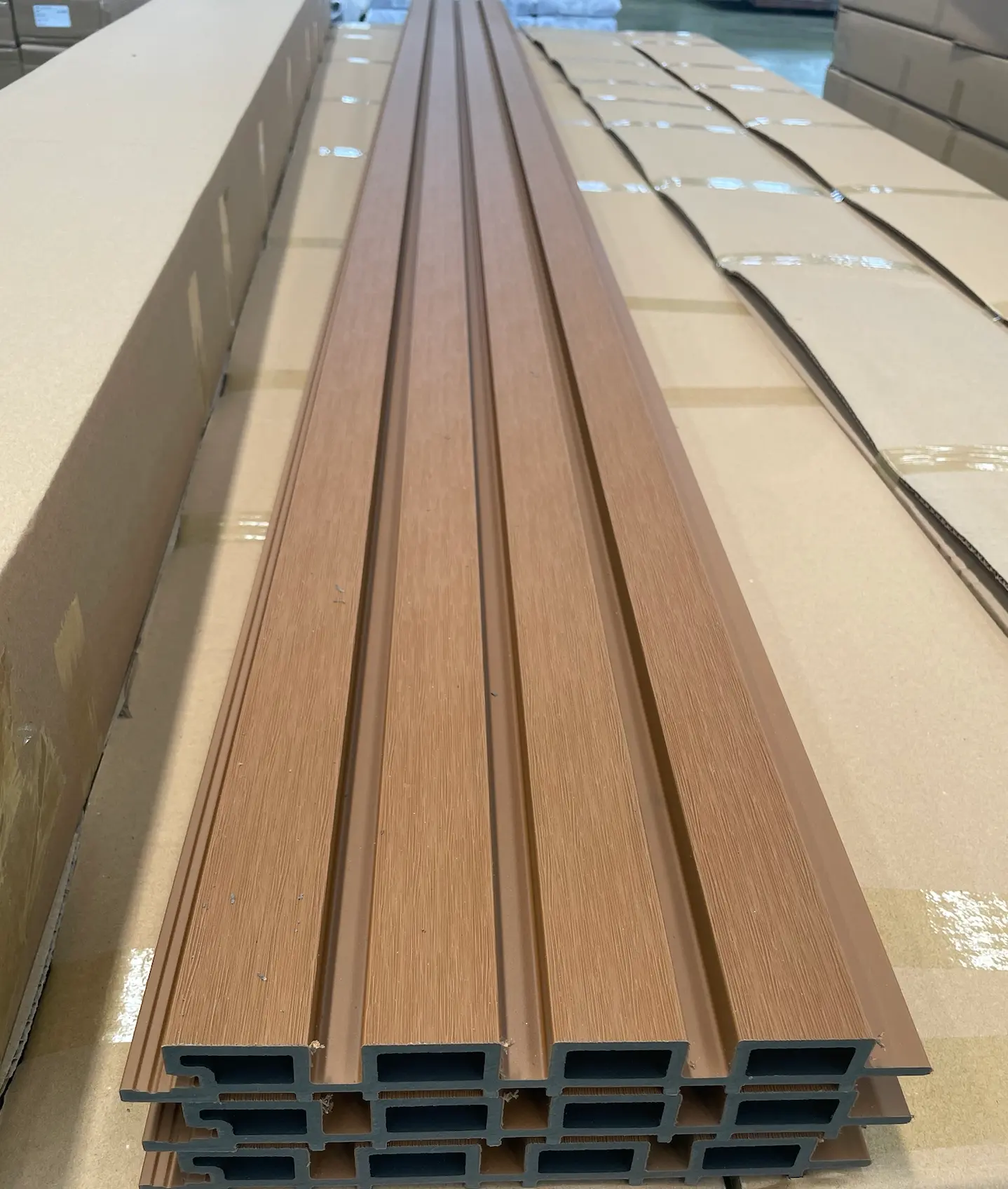
Maintenance-free exterior cladding engineered for harsh UV climates.
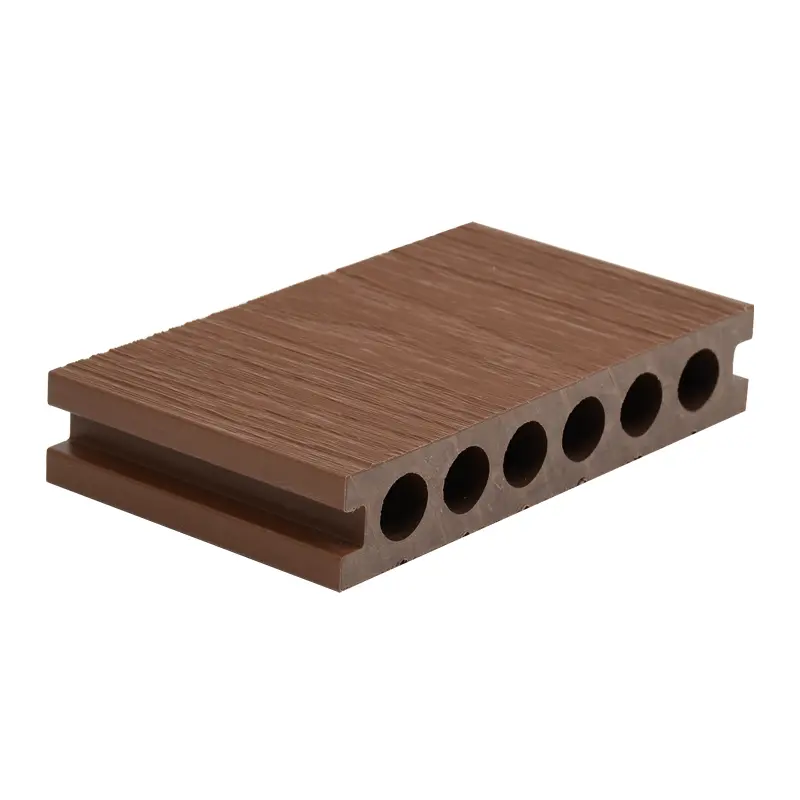
Anti-slip, moisture-proof composite decking systems for commercial walkways.
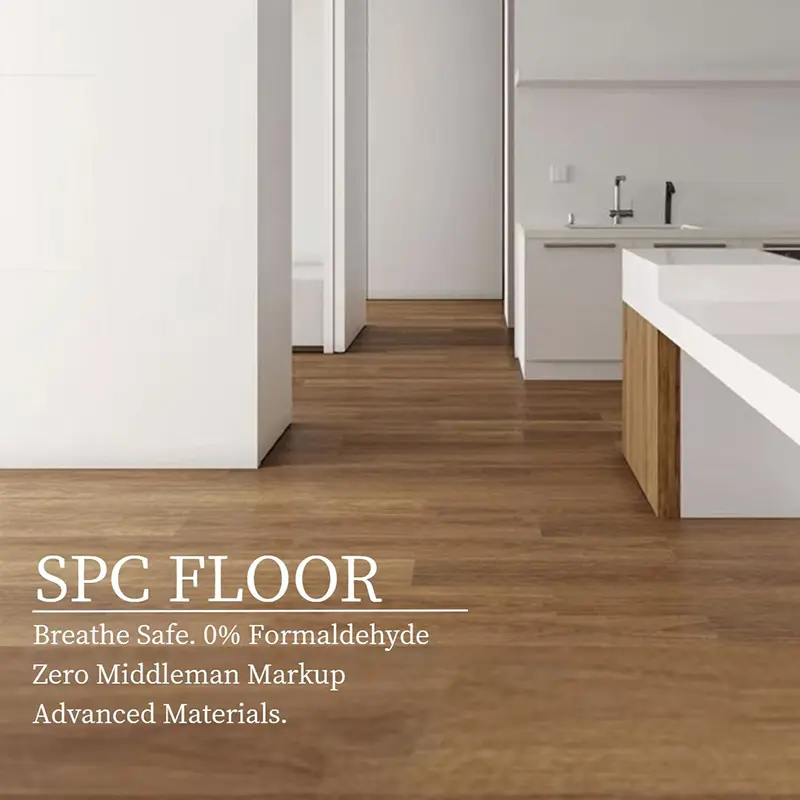
Stone-plastic composite flooring with click-lock profile for quick installation.
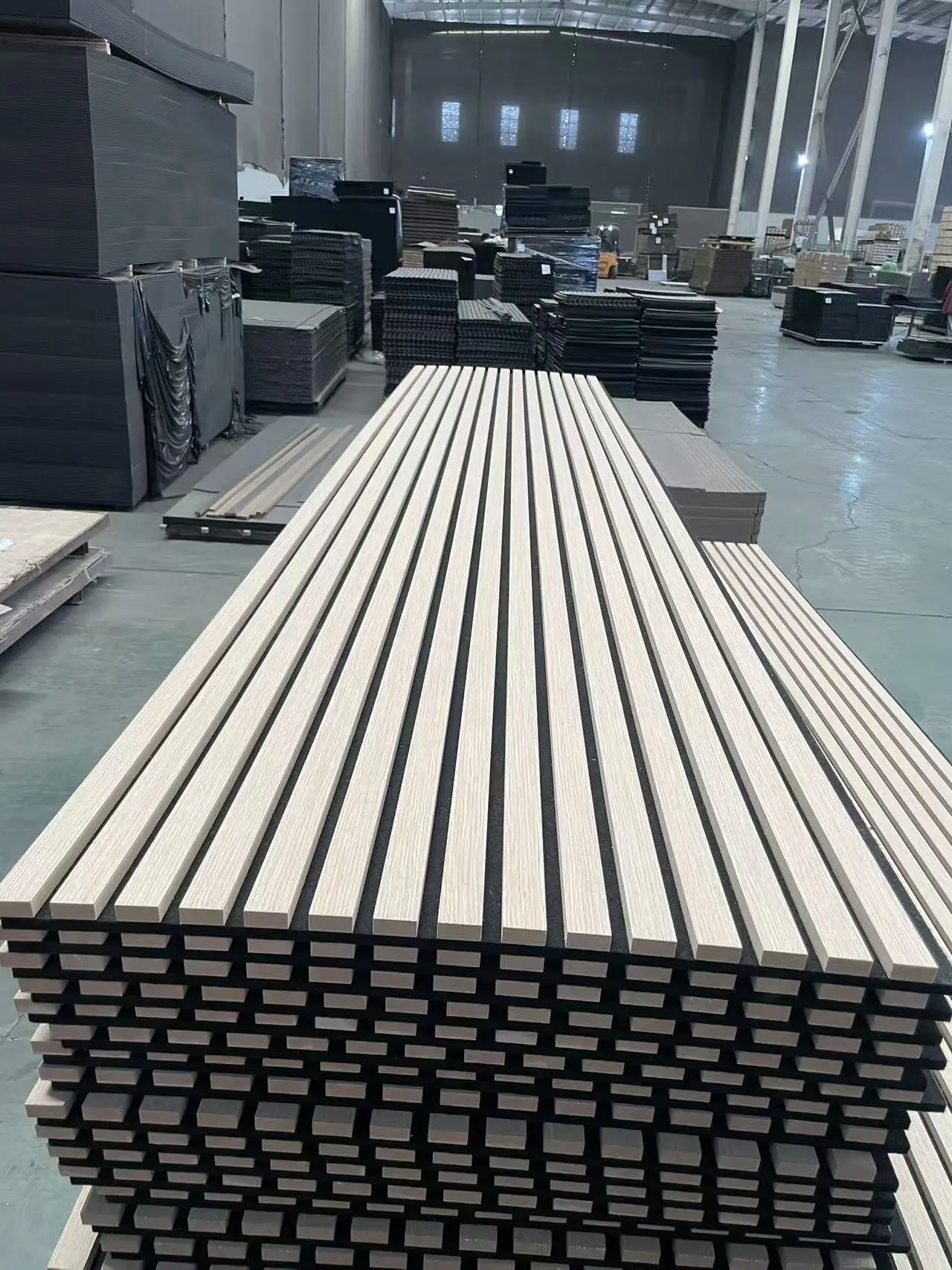
Sound-absorbing PET polyester backing with natural timber veneer slats.
Lightweight flexible ceramic tile panels providing natural slate textures.
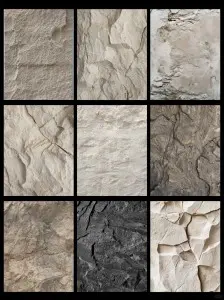
High-density polyurethane faux stone slabs for fast feature-wall installs.
Direct engineering answers to critical purchasing, physical performance, and installation queries raised by importers, architects, and main contractors.
 Rich New Materials