 Rich New Materials
China WPC Sheet Manufacturing Ecosystem & Material Science Whitepaper
The global demand for high-performance Wood-Plastic Composites (WPC) and synthetic surface cladding has undergone a paradigm shift. Modern architectural engineering requires surface materials that balance carbon-neutral sustainability, structural resilience, fire retardancy, and cost-effective scalability. As international procurement heads evaluate China WPC sheet suppliers and factories, understanding the underlying polymer physics, supply chain integration, and manufacturing quality controls becomes vital to securing long-term project reliability.
1. Technical Composition & Polymer Rheology of WPC Sheets
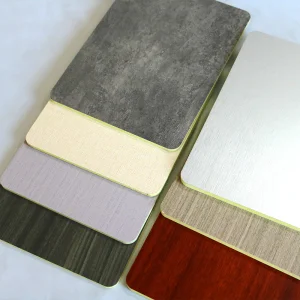
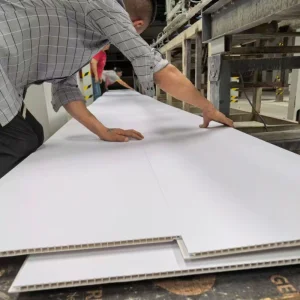
Wood-Plastic Composite (WPC) sheets represent a sophisticated multi-component matrix where natural bio-mass fibers (refined wood flour, bamboo dust, or agricultural micro-fibers) are thermomechanically combined with thermoplastic polymers (PVC, High-Density Polyethylene, or Polypropylene) and specialized chemical coupling agents.
In a standard high-durability indoor WPC sheet manufactured by leading Chinese facilities like Linyi Rich New Materials Co., Ltd., the volumetric and mass formulations typically consist of:
- Polymer Matrix (50% - 60%): Virgin or high-purity recycled Polyvinyl Chloride (PVC) or HDPE resin providing non-hydroscopic integrity, structural rigidity, and resistance to biological decay.
- Lignocellulosic Fiber Filler (30% - 40%): Superfine 80-120 mesh wood powder derived from certified sustainable forestry residues, offering mechanical tensile strength, flexural modulus, and timber-like tactile qualities.
- Chemical Additive Package (8% - 12%): Includes maleic anhydride grafted coupling agents (to bridge hydrophilic wood fibers with hydrophobic polymers), heat stabilizers, lubricants (stearic acid/PE wax), impact modifiers, and titanium dioxide (TiO2) UV stabilizers.
2. Engineering Performance Metrics: WPC vs. Alternative Substrates
To establish why WPC sheets are replacing traditional solid timber, medium-density fiberboard (MDF), and pure plastic sheets in commercial fit-outs, evaluate the standardized testing parameters below:
| Physical / Performance Metric | Standard Indoor WPC Sheet | Co-Extruded Outdoor WPC | Traditional MDF Board | Natural Solid Hardwood |
|---|---|---|---|---|
| Density (g/cm³) | 0.85 – 1.05 | 1.25 – 1.40 | 0.65 – 0.80 | 0.60 – 0.85 |
| 24-Hour Water Swelling Rate | < 0.5% (Impermeable) | < 0.1% (Fully Sealed) | 12% – 25% (High Risk) | 8% – 15% (Warping Risk) |
| Fire Retardancy Rating | Class B1 (EN 13501-1) | Class B1 / ASTM E84 Class A | Class B3 / Combustible | Combustible (Class C/D) |
| Formaldehyde Emission | E0 Level / Non-detectable | Zero Formaldehyde | E1 – E2 (Resin dependent) | Natural traces only |
| Termite & Rot Resistance | Immune (100% Resistant) | Immune (100% Resistant) | Extremely Vulnerable | Requires Chemical Treatment |
| Thermal Expansion (mm/m°C) | < 0.04 | < 0.025 | N/A (Hydro-sensitive) | Anisotropic Movement |
3. Supply Chain Dominance: The Linyi Manufacturing Advantage
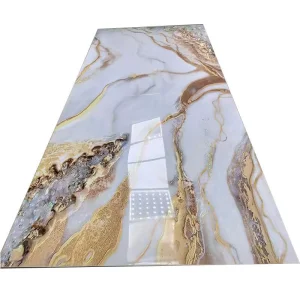
Procurement teams frequently inquire why Linyi City, Shandong Province has emerged as the premier manufacturing epicenter for WPC, SPC, UV Marble, and Bamboo Charcoal panels globally. The rationale lies in an integrated industrial cluster effect:
- Upstream Raw Material Proximity: Linyi houses China's largest synthetic resin market and wood-processing raw material hubs, reducing transport latency and raw material cost fluctuations.
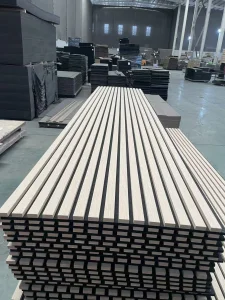
- Advanced Automation & Extrusion Precision: Facilities like Linyi Rich New Materials utilize twin-screw extruders with real-time infrared thickness monitoring, achieving tolerance levels within ±0.15mm across multi-meter continuous sheets.
- Integrated Export Logistics Hub: Situated within short transit distance to Qingdao Port and Rizhao Port, supported by dedicated bonded warehouses, customs clearance lanes, and multimodal freight networks.
4. Specialized Application Scenarios for Global Infrastructure & Commercial Real Estate
Due to their high structural versatility, products sourced from premier Chinese WPC suppliers fulfill demanding specifications across diverse architectural categories:
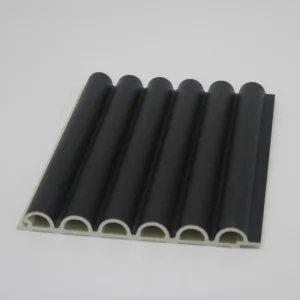
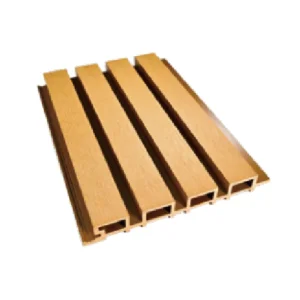
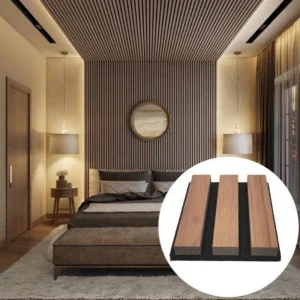
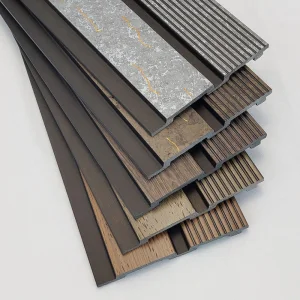
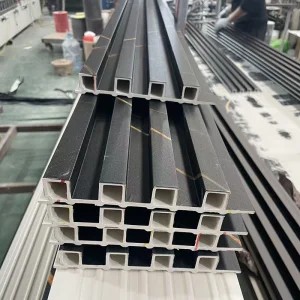
- Commercial Interior Feature Walls: Fluted and semicircular WPC wall panels create acoustically optimized, visually arresting accent walls in hotel lobbies, corporate headquarters, and retail flagships.
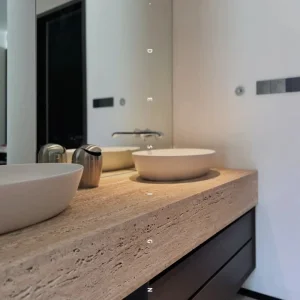
- High-Humidity Environments: Spa centers, indoor pool surrounds, and tropical residential bath spaces utilize PVC ceiling panels and WPC wall cladding to prevent mold growth, mildew, and delamination.
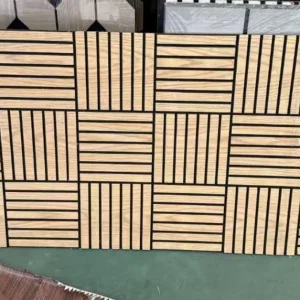
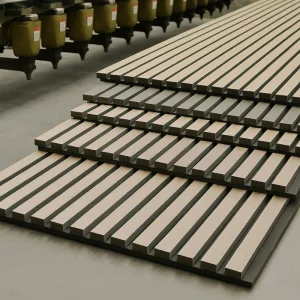
- Acoustic Optimization Engineering: Slatted wood acoustic wall panels featuring sound-absorbing PET felt backings effectively dampen reverberation time (RT60) in auditoriums, conference rooms, and home theaters.
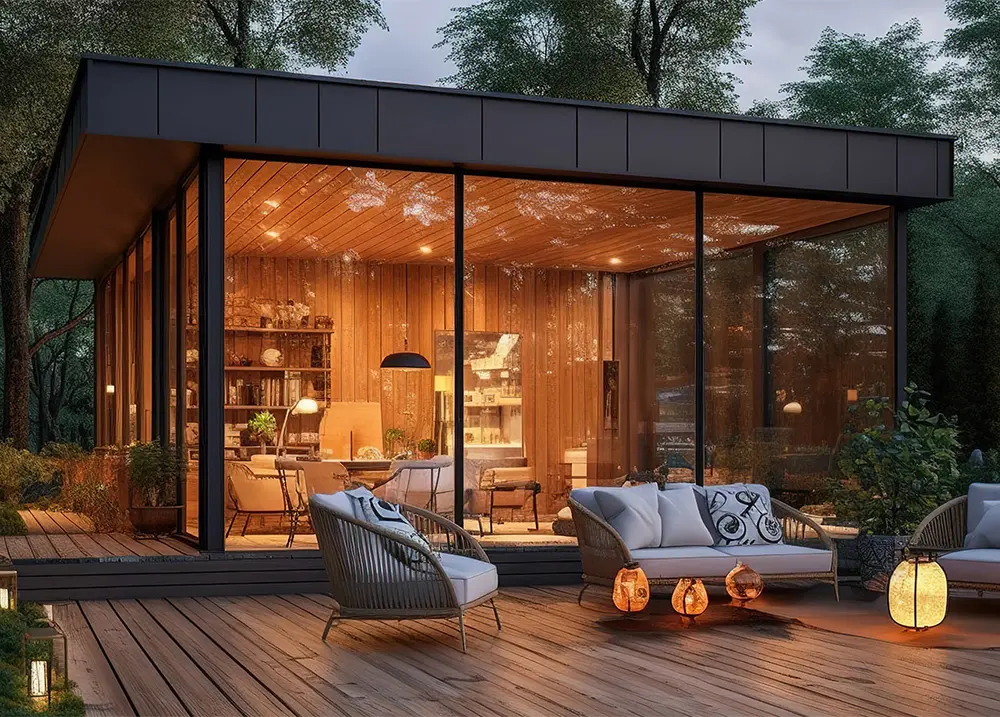
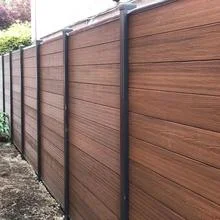
- Exterior Facade Systems: Co-extruded UV-stabilized WPC outdoor wall cladding resists severe solar radiation, salt-spray corrosion in coastal regions, and freeze-thaw cycles without requiring painting or sealing.