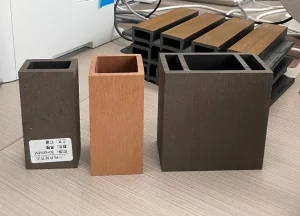
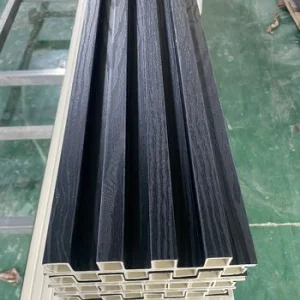
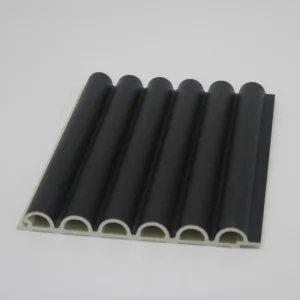
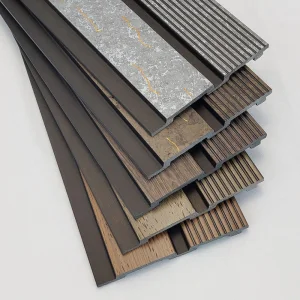
Direct-from-factory architectural materials manufactured to ISO9001 and CE structural standards for worldwide commercial and residential distribution.
In the rapidly evolving global architecture and exterior surface industry, WPC Klickfliesen (Wood-Plastic Composite Click-Interlocking Deck Tiles) have established a dominant position as the premier alternative to traditional hardwood decking, stone pavers, and ceramic exterior tiles. Modern commercial developments, multi-family housing projects, and high-end residential landscapes demand exterior flooring solutions that eliminate high maintenance costs, structural timber degradation, and complex substructure installation protocols.
Chinese WPC manufacturing clusters—most notably centered in Shandong Province—have undergone an unprecedented Industry 4.0 technological transformation. By integrating high-molecular weight HDPE (High-Density Polyethylene) matrices with micro-refined hardwood fiber flours and nano-scale UV stabilization complexes, leading Chinese factories now supply over 65% of the world’s modular composite deck tiles. This whitepaper analyzes the underlying polymer physics, automated manufacturing workflows, international compliance protocols, and strategic procurement frameworks defining the global WPC Klickfliesen supply chain.
Key Market Insight for Global Importers & Procurement Directors: Modern 3rd-Generation Co-extrusion WPC Klickfliesen engineered in top-tier Chinese facilities achieve a linear thermal expansion coefficient ($\alpha$) of under $35 \times 10^{-6} / \text{K}$, eliminating structural warping and interlock disengagement across extreme thermal gradients (-40°C to +65°C).
Superior mechanical stability relies on a balanced formulation ratio: 60% virgin hardwood fiber (60-80 mesh fineness), 30% recycled high-density polyethylene (HDPE grade EA9000), and 10% essential chemical additives including coupling agents (Maleic Anhydride Grafted PE), Hindered Amine Light Stabilizers (HALS), and non-toxic zinc borate flame retardants.
The structural integrity of WPC Klickfliesen hinges on the sub-tier plastic base mesh. Engineered using high-tensile virgin polypropylene (PP) with reinforced cross-beam geometry, modern base grids withstand static point loads exceeding 2,500 kg/m² while providing integrated 360-degree multi-directional drainage channels.
Advanced 3D online thermo-embossing technology imparts deep 1.2mm realistic wood-grain textures directly during the hot extrusion process. This structural texturing guarantees an R11 slip-resistance certification under DIN 51130, ensuring user safety under both wet bare-foot and commercial shoe-traffic conditions.
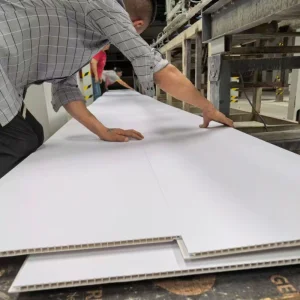
As a flagship enterprise driving the modern green building material revolution in China, LINYI RICH NEW MATERIALS CO., LTD. operates an advanced industrial ecosystem representing the benchmark of Chinese composite manufacturing capabilities. Headquartered in Linyi City, Shandong Province—the primary logistics and timber processing hub of Northern China—our enterprise merges research & development, continuous automated extrusion, and global trade execution.
The composite industry is transitioning from basic wood-plastic physical blends toward high-performance bio-mimetic polymers and dynamic weather-adaptive materials. China's leading R&D centers are currently commercializing three breakthrough technological pillars:
While 1st Generation WPC was uncapped and prone to oil staining, and 2nd Generation used standard polyethylene capping, Co-Extrusion 3.0 encapsulates the core in an ultra-durable fluoropolymer-modified shield. This 1.8mm outer shell provides absolute impermeability to grease, mustard, wine, and harsh atmospheric pollutants, elevating scratch resistance to pencil hardness 5H.
Outdoor dark composite decking historically suffered from high heat absorption under direct sun exposure. Next-generation Klickfliesen incorporate near-infrared (NIR) reflective inorganic ceramic pigments. This innovation reduces surface temperatures by 12°C to 15°C compared to standard WPC tiles in summer environments, drastically improving barefoot walking comfort.
Aligning with global ESG mandates and EU Net-Zero goals, technical roadmaps prioritize replacing fossil-derived HDPE with bio-succinic acid polymers and agricultural residue fibers (straw, rice husk). Combined with 100% recycled plastic bases, modern factories are achieving certified carbon-negative footprints from cradle-to-gate.
Modular WPC Klickfliesen solve critical installation bottlenecks in diverse commercial and municipal engineering projects:
Traditional decking requires heavy wooden or aluminum joists anchor-bolted into subfloors, risking damage to delicate roof waterproofing membranes. Interlocking WPC click tiles float directly over existing concrete, asphalt, or rubberized membranes without puncture risks. The under-grid channels allow unimpeded rainwater flow toward roof drains.
Restaurants, hotels, and cafes require rapid seasonal outdoor floor installations. WPC Klickfliesen allow rapid assembly of a 200m² terrace in under 4 hours without power tools, glue, or specialized labor. At season end, tiles disassemble smoothly for winter storage without structural degradation.
Saline air, chlorine, and standing water lead to rapid rotting, splintering, and fastener corrosion in natural wood. Polymer composite click tiles feature a 0% water absorption ceiling in 24-hour immersion tests, maintaining structural integrity without swelling, mold growth, or nail pops.
When evaluating Chinese WPC Klickfliesen factories, B2B procurement managers and quality control specialists should audit products against the following technical parameters to ensure long-term performance:
| Performance Indicator | Test Standard | Commercial Grade Target | Low-Quality Indicator (Warning) |
|---|---|---|---|
| Flexural Strength / Modulus | ISO 178 / ASTM D790 | ≥ 35 MPa / ≥ 3200 MPa | < 20 MPa (Brittle break risk) |
| 24-Hour Water Absorption | EN 317 / ASTM D1037 | ≤ 0.45% by weight | > 2.0% (Risk of micro-swelling) |
| Color Fastness (Xenon Arc) | ISO 105-B02 Grade | Grade 7 - 8 (1,000 hrs UV) | ≤ Grade 4 (Noticeable fading <6 mo) |
| Point Load Capacity | EN 14354 Annex C | ≥ 2,500 kg per m² | < 1,000 kg (Grid collapse risk) |
| Formaldehyde Emission | EN 717-1 | E0 Grade (Non-detectable / Zero) | E2 Grade (Off-gassing VOCs) |
| Fire Resistance Rating | EN 13501-1 | Bfl - s1 Class | E Class (Highly flammable) |
Exporting building materials into North America, Europe, and Oceania requires rigorous regulatory documentation. Leading Chinese manufacturers like Linyi Rich New Materials operate complete compliance management systems:
Under recent EU legislative frameworks, all wood fiber components integrated into composite tiles must verify zero-deforestation supply chains. Our factory enforces full supply chain trace-ability, utilizing FSC-certified (Forest Stewardship Council) post-industrial wood flour verified via GPS-mapped forestry origins.
All polymer compounds undergo third-party laboratory verification by Intertek and SGS for over 235 Substances of Very High Concern (SVHC), including heavy metal stabilizers (lead, cadmium), phthalate plasticizers, and polycyclic aromatic hydrocarbons (PAHs), ensuring safe indoor/outdoor application.
Manufacturing bases maintain full accreditation under ISO9001 (Quality Management), ISO14001 (Environmental Management), and ISO45001 (Occupational Health & Safety), backed by BSCI (Business Social Compliance Initiative) social audits to guarantee ethical labor practices.
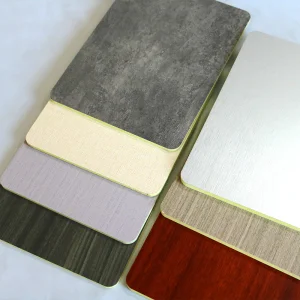
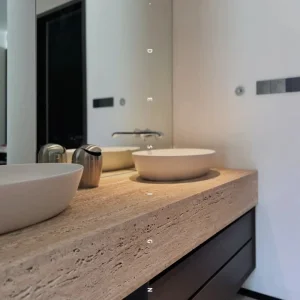
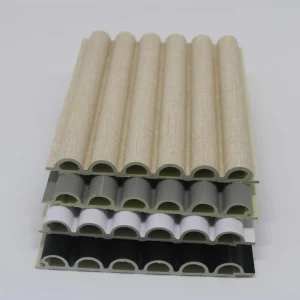
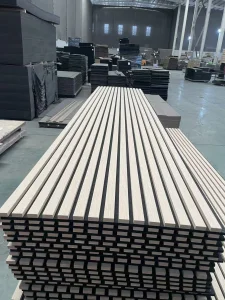
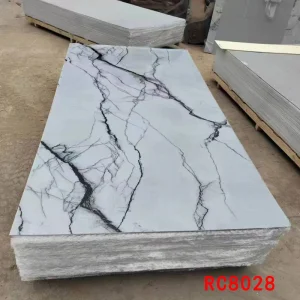
Beyond WPC Klickfliesen and decking systems, Linyi Rich New Materials operates dedicated high-precision production lines across complementary decorative architectural categories, offering comprehensive full-container consolidation solutions for international distributors.
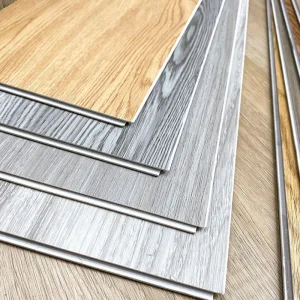
Operating 4 high-precision lines producing 3 million square meters annually. Featuring ultra-dense stone plastic composite cores, IXPE acoustic underlayment, and wear-resistant UV lacquers ideal for high-traffic commercial spaces.
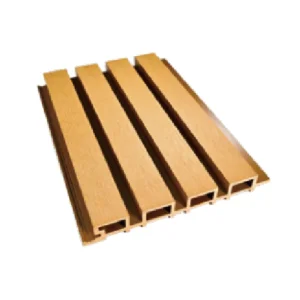
Utilizing 40 customized extrusion lines producing 2 million square meters annually. Engineered specifically for extreme weathering, micro-crack prevention, and fade resistance in high-UV climate zones.
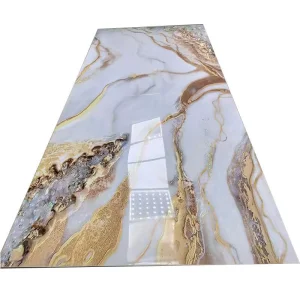
Featuring 12 dust-free UV coating lines (6 million sqm/yr) and 6 high-tech carbon fiber composite panel lines (1 million sqm/yr) with custom computer-controlled CNC engraving capability.
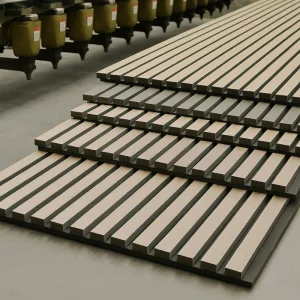
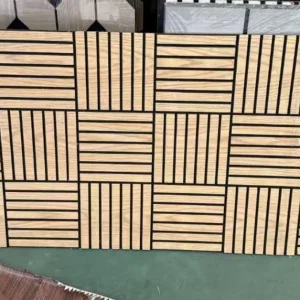
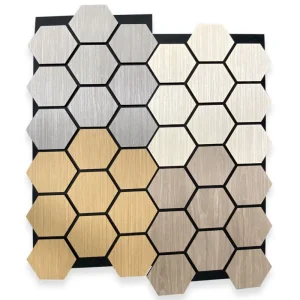
In-house precision automated routing machines allow custom DIY acoustic patterns, flame-retardant PET felt backings, and over 200 high-definition decorative foil molds for interior design projects.
Our high-density HDPE polymer matrix exhibits near-zero linear moisture uptake (<0.45%), preventing internal micro-cracking caused by absorbed water expanding during freezing temperatures. The tiles remain structurally stable down to -40°C.
No joists or adhesives are required. The sub-floor simply needs to be firm, relatively flat (gradient <2%), and clean. Ideal surfaces include concrete pads, worn wooden decks, flat stone, roof membranes, or compacted gravel.
Yes. We provide full OEM/ODM customization services. Our toolmaking division produces custom profile molds, specific color-matching to RAL/Pantone color scales, and custom-engraved brand logos on the plastic click bases.
With our Co-Extrusion 3.0 fluoropolymer shielding, commercial installations carry a minimum structural lifespan of 15 to 20 years with zero oiling, staining, or sanding required over its service life.
WPC tiles are high-density products (approx. 1.35 g/cm³). We pack tiles into heavy-duty corrugated cartons fitted on reinforced export pallets. A standard 20ft container accommodates approximately 6,000 to 6,500 pieces (approx. 600m²), maximizing weight capacities without damaging edge interlocks.
Yes. Unlike traditional nailed-down decking boards, individual interlocking tiles within a surface grid can be unclipped and replaced in minutes without dismantling the surrounding deck area.
Complete your material procurement with our integrated interior and exterior wall cladding, ceilings, and acoustic solutions.
 Rich New Materials