Factory-direct engineered wall panels, acoustic slats, UV marble sheets, and rigid core systems
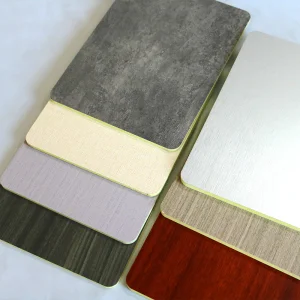
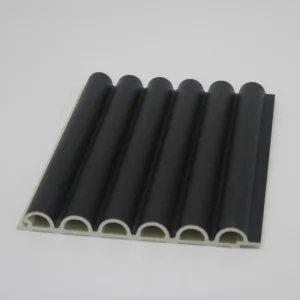
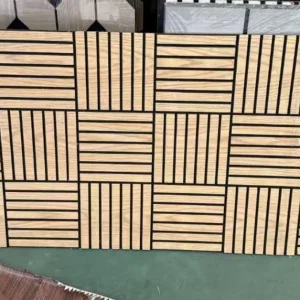
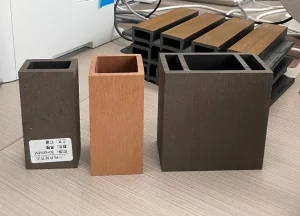
Analysis of material transition from traditional timber and drywall to engineered polymer composites
The global interior architecture and commercial fit-out landscape has undergone a structural shift toward high-performance, sustainable, and rapid-installation interior materials. Wood-Plastic Composite (WPC) for indoor applications represents the culmination of material science innovation, marrying the natural warmth and aesthetic elasticity of timber with the structural stability, moisture resistance, and longevity of thermoplastic polymers.
Driven by strict environmental mandates (such as EU REACH, U.S. CARB Phase 2, and LEED v4.1 certifications), property developers, commercial contractors, and hospitality chains are aggressively moving away from traditional Medium-Density Fiberboard (MDF), solid timber, and standard gypsum board. Traditional wood components suffer from high susceptibility to moisture absorption, linear thermal distortion, termite infestation, and continuous VOC emission. Conversely, WPC indoor panels utilize co-extruded thermoplastics—primarily Polyvinyl Chloride (PVC) or High-Density Polyethylene (HDPE) reinforced with ultra-fine bamboo or timber micro-flour—to form a dense, hydrophobic matrix.
Valued at over $7.8 Billion globally in 2024, the indoor WPC market is projected to expand at a Compound Annual Growth Rate (CAGR) of 11.4% through 2032. Sourcing directors and procurement managers worldwide face complex choices in vendor selection. Understanding the technical capabilities, raw material purity, automated extrusion tolerances, and cost structure of top-tier China WPC Indoor Manufacturers & Factories is vital to establishing a resilient, profitable, and compliant global supply chain.
Inside China's premier high-volume production ecosystem for interior building composites
China's dominance in the global WPC manufacturing sector stems from concentrated industrial infrastructure clusters, with Shandong Province—specifically Linyi City—acting as the worldwide epicenter for timber processing, resin formulation, and automated panel extrusion. Leading this industrial transformation is LINYI RICH NEW MATERIALS CO., LTD., a modernized industrial enterprise integrating R&D, advanced material formulation, automated production lines, and global supply chain logistics.
Operating a state-of-the-art intelligent manufacturing plant spanning over 100,000 square meters and powered by a specialized technical workforce of over 300 engineers, precision technicians, and QC specialists, the enterprise delivers massive production scale designed to eliminate order backlogs, ensure batch-to-batch color stability, and guarantee tight dimensional tolerances.
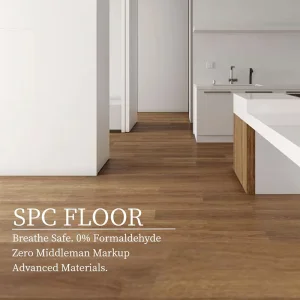
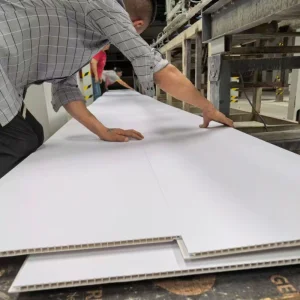
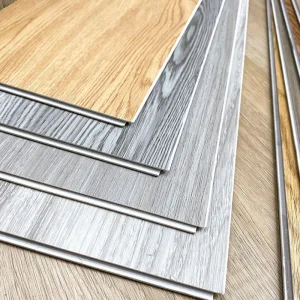
Supported by 120 fully automated twin-screw extrusion lines delivering 12 million square meters annually. Features zero-gap interlocking joints, engineered hollow-core acoustic chambers, and hyper-realistic wood grain lamination.
Operating 4 high-precision extrusion lines with an annual capacity of 3 million square meters. Incorporates ultra-dense limestone composite cores, IP-protected click-lock geometry, and zero-formaldehyde IXPE acoustic underlayment.
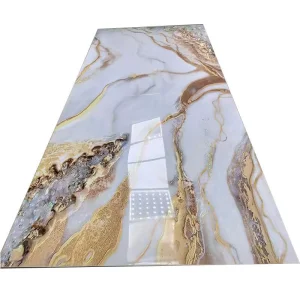
Equipped with 12 customized automated production lines across dust-free cleanrooms, yielding 6 million square meters yearly. Features 3D thermal transfer printing and 3H+ hardness UV-cured topcoat for scratch-resistant commercial walls.
40 customized co-extrusion lines outputting 2 million square meters annually. Specialized in capped ASA/WPC weather-resistant formulations built for extreme ambient temperatures (-40°C to +60°C).
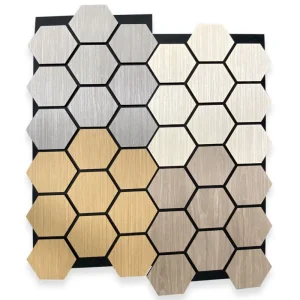
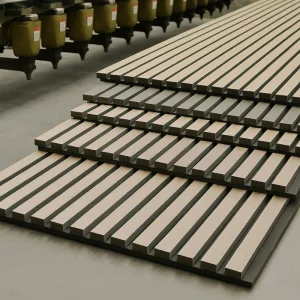
In-house CNC precision slotting and multi-axis engraving machines designed for custom architectural acoustic profiles. Combined with recycled PET felt to achieve Sound Absorption Coefficient (NRC) up to 0.85.
6 production lines outputting 1 million square meters of ultra-lightweight carbon fiber panels with custom grooving capabilities, alongside 6 PS lines backed by 200+ precision molds for intricate interior profiles.
Objective engineering comparison evaluating physical properties, fire compliance, and environmental lifecycle
| Performance Metric | Indoor WPC Composite | Traditional MDF / Fiberboard | Solid Hardwood | Pure PVC Sheet |
|---|---|---|---|---|
| Density Range (g/cm³) | 0.95 - 1.25 | 0.65 - 0.80 | 0.55 - 0.75 | 1.35 - 1.45 |
| Moisture Absorption (24hr) | < 0.5% (Hydrophobic) | 12% - 25% (High Swell) | 8% - 15% (Hygroscopic) | 0.01% (Waterproof) |
| Fire Retardancy Rating | EN 13501-1 Class B-s1, d0 | Class D / E (Combustible) | Class D / E (Combustible) | Class B-s1, d0 |
| Formaldehyde Emission | EN 717-1 E0 / Super E0 (Zero) | E1 / E2 (Resin dependent) | Natural (Zero added) | Zero Formaldehyde |
| Flexural Modulus (MPa) | 2,800 - 3,500 | 1,800 - 2,200 | 7,000 - 10,000 | 1,500 - 2,000 |
| Impact Resistance (kJ/m²) | > 12.5 (High Toughness) | 4.0 - 6.0 | 8.0 - 10.0 | 10.0 - 14.0 |
| Insect & Termite Resistance | 100% Resistant | Vulnerable | Highly Vulnerable | 100% Resistant |
| Linear Thermal Expansion | < 0.04 mm/m/°C | Moderate Swell | Anisotropic Shrinkage | > 0.07 mm/m/°C |
As demonstrated in the engineering matrix above, modern WPC indoor panels produced by leading Chinese factories bridge the critical gap between aesthetic demand and structural durability. By encapsulating cellulose fibers within a high-density polymer shield, WPC eliminates the dimensional instability and decay associated with wood, while mitigating the plastic brittleness and artificial tactile feel of unreinforced PVC.
Pioneering advancements redefining interior wall paneling, ceiling systems, and acoustic engineering
Next-generation indoor WPC utilizes dual-phase co-extrusion technology. While the core consists of recycled bamboo flour and PVC polymer, an outer shield made of modified fluoropolymer acrylic is fused simultaneously. This creates a zero-porosity surface that resists stubborn stains (such as oil, coffee, and ink), withstands aggressive commercial cleaning chemicals, and provides superior color fastness under artificial UV lighting.
Leading Chinese manufacturers are integrating micro-porous bamboo charcoal nanoparticles into the core formulation. Beyond maintaining structural lightness, bamboo charcoal acts as a continuous indoor air filter, adsorbing residual airborne formaldehyde, neutralizing volatile organic odors, and regulating ambient micro-humidity in enclosed commercial spaces.
To reduce shipping weight and lower installation labor costs without sacrificing impact strength, modern lines employ physical gas micro-foaming agents (such as supercritical CO₂). This creates a closed-cell honeycombed internal geometry, reducing panel weight by 20–30% while enhancing sound damping (STC rating) and thermal insulation (R-value).
Engineered tolerance control with digital CNC tooling allows WPC indoor wall panels to feature micro-bevel tongue-and-groove click profiles. This enables fast, screwless installation over existing tiles or drywall studs, reducing site installation time by up to 65% compared to wet-plastering or traditional timber furring strip mounting.
Where high performance meets design flexibility across global infrastructure projects
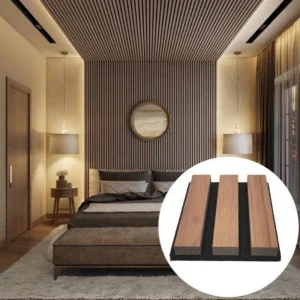
In high-humidity coastal resorts, hotel lobbies, and executive guest suites, WPC fluted wall panels and UV marble feature walls deliver the visual elegance of natural teak, marble, and walnut without risk of warping, mold growth, or periodic varnish maintenance.
Integrating WPC acoustic slat wood panels backed by acoustic felt solves reverberation problems in open-plan offices and conference spaces, combining acoustic comfort (NRC 0.85) with modern linear architectural aesthetics.
Hospitals, clinics, and school corridors require impact resistance and hygienic cleanability. WPC panels treated with anti-microbial surface coatings resist bacterial adhesion and withstand frequent disinfections with chemical cleansers.
Flagship stores, shopping malls, and airport lounges benefit from the fire-retardant (EN 13501-1 B-s1,d0) properties of WPC paneling, ensuring strict compliance with international public building safety codes.
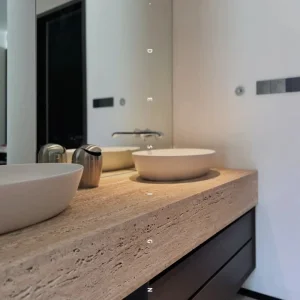
Ideal for residential bathrooms, basements, kitchens, and indoor swimming pool enclosures where elevated relative humidity leads to fast degradation of traditional drywall and natural wood trim.
Lightweight 8mm PVC ceiling panels and suspended WPC grating beams provide architectural depth while concealing HVAC ducting, sprinkler pipes, and electrical wiring with easy maintenance access.
A standard operating procedure for international buyers auditing Chinese WPC factories
When negotiating high-volume OEM/ODM contracts with China WPC Indoor Manufacturers, procurement executives must look beyond unit price per square meter. Ensuring long-term project performance requires rigorous factory audits and standardized product quality verification.
Verify whether the manufacturer utilizes 100% virgin PVC resin or high-grade post-industrial recycled material. Virgin PVC ensures consistent cell structure, higher tensile toughness, and predictable expansion rates, whereas low-grade post-consumer waste introduces impurities that cause panel brittleness and color fading.
Demand a 4-hour boiling water immersion test on sample cross-sections. Top-tier WPC should exhibit zero layer delamination, less than 0.3% volumetric expansion, and no surface blistering after immediate thermal cooling.
For decorative PUR-laminated WPC wall panels, conduct a 90-degree cross-hatch peel test (ISO 2409). The decorative PVC/PET film must not peel away from the WPC substrate, confirming high-temperature polyurethane hot-melt bonding.
Ensure the factory utilizes reinforced corrugated master cartons with edge-protectors, shrink-wrap palletization, and custom wooden crating. Proper loading density strategies can increase 40ft HQ container capacity to over 2,200 m² of heavy paneling, driving down freight costs per unit.
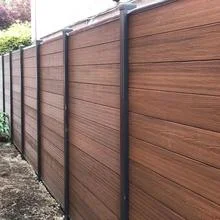
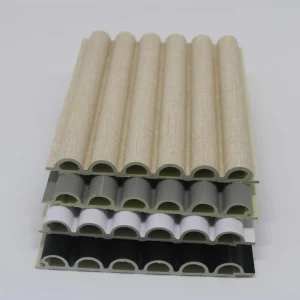
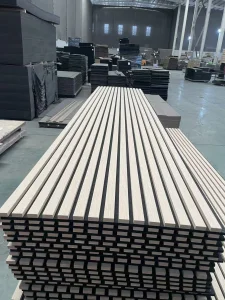
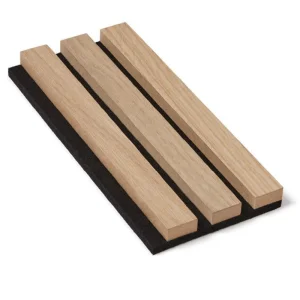
Explore our full line of acoustic panels, soft stone cladding, and specialty composite systems
Detailed answers to critical technical and logistical questions asked by B2B buyers
 Rich New Materials