 Rich New Materials
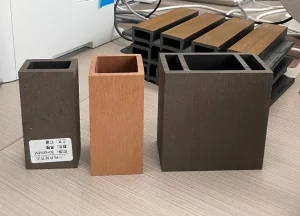
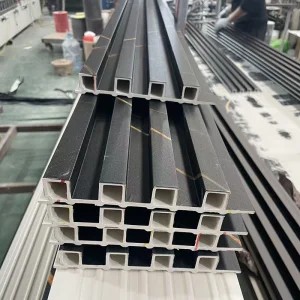
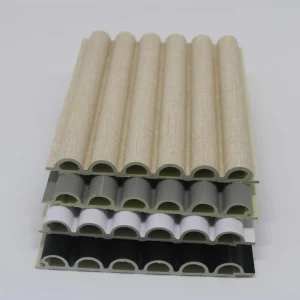
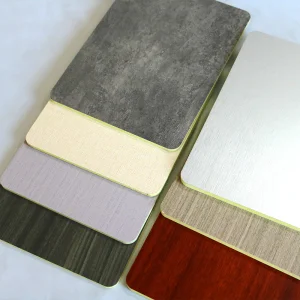
1. Executive Industry Insight: The Evolution of WPC Cutter Machinery & Composite Profile Fabrication in China
An engineering analysis of manufacturing workflows, cutter blade metallurgy, extrusion tolerances, and material physics in Wood-Plastic Composites.
The global demand for Wood-Plastic Composite (WPC) materials, Rigid Core Stone-Plastic Composites (SPC), and Polystyrene (PS) architectural profiles has undergone a dramatic transformation over the past decade. Modern architectural requirements demand extreme structural stability, zero-formaldehyde volatile organic compound (VOC) emissions, high moisture resistance, and seamless flame-retardant performance. To meet these stringent specifications, the manufacturing backend—specifically the continuous extrusion equipment, precision WPC inline cutters, cross-cut sawing systems, and high-speed multi-axis CNC trimming machinery—has had to undergo a technological revolution.
China has established itself as the undisputed epicentre of WPC profile fabrication and WPC cutting system technology. China WPC cutter manufacturers and profile factories, exemplified by industry leaders such as Linyi Rich New Materials Co., Ltd., have systematically bridged the gap between raw chemical polymer synthesis and micro-precision mechanical finishing. The fabrication of high-density WPC profiles requires specialized cutting geometry, tungsten carbide or polycrystalline diamond (PCD) tipped saw blades, and automated flying cut-off units capable of operating continuously under aggressive thermal and abrasive conditions.
Technical Information Gain Note: Unlike traditional timber processing, WPC cutting involves a hybrid matrix of thermoplastic polymers (HDPE, PVC, or PP) reinforced with dense cellulosic fibers (60–80 mesh wood flour or bamboo particles) and inorganic fillers (calcium carbonate, $CaCO_3$). This unique molecular composition induces intense abrasive wear on standard cutting tools and creates localized friction heat that can melt the polymer phase if cutting parameters are improperly calibrated.
2. Cutting Tool Engineering & Inline Sawing Technology in WPC Extrusion
In a high-throughput WPC factory setting, the cutting apparatus is a critical inline module placed immediately downstream of the vacuum calibration tables and caterpillar pullers. As extruded WPC profiles emerge continuously at temperatures between $60^\circ\text{C}$ and $90^\circ\text{C}$, the cutting system must execute clean, burr-free perpendicular or miter cuts without stopping the production line or causing micro-fractures in the composite matrix.
2.1 PCD vs. Tungsten Carbide Tool Metallurgy
To maintain micro-dimensional accuracy ($\pm 0.05\text{ mm}$ tolerance), China WPC cutter manufacturers utilize advanced metallurgy and optimized rake/relief angle geometries tailored to the specific chemical density of the composite:
- Polycrystalline Diamond (PCD) Tooling: Designed for continuous production lines producing high-density SPC flooring and heavy-duty outdoor PE-WPC decking. PCD cutters exhibit a tool life up to 50 times longer than standard carbide, resisting the extreme abrasion of calcium carbonate mineral fillers.
- Micro-Grain Tungsten Carbide (YG8 / YG10 Grade): Utilized extensively for indoor PVC wall panel profiling, WPC timber tubes, and PS skirtings. Offers superior toughness to absorb impact shocks during high-speed cross-cutting.
- Modified Tooth Angles: High-speed inline WPC cross-cut saws employ Triple Chip Grind (TCG) tooth profiles with alternate top bevels (ATB) and negative rake angles ($-5^\circ$ to $-8^\circ$). This prevents top-layer chipping, melting of decorative PVC veneers, or fiber tearing during the ultra-fast cut cycle.
2.2 Inline Flying Cut-Off Saws & Dust Extraction Systems
Modern WPC extrusion lines operate with pneumatic or servo-driven flying guillotine cutters and high-RPM circular saw units. As the profile advances, the cutting carriage locks onto the extrusion speed, executes the precision cut, and returns instantly to the starting position. Integrated dual-channel vacuum dust extraction hoods operate at airflow velocities exceeding $28\text{ m/s}$ to capture fine WPC particulate dust, preventing thermal accumulation on the blade gullets and maintaining plant environmental safety.
| Cutting Parameter | Indoor PVC-WPC Panels | Outdoor Co-Extruded PE-WPC | Rigid Core SPC Flooring |
|---|---|---|---|
| Matrix Density Ratio | $0.65 - 0.90 \text{ g/cm}^3$ | $1.20 - 1.40 \text{ g/cm}^3$ | $1.90 - 2.10 \text{ g/cm}^3$ |
| Tool Material Grade | YG10 Micro-Grain Carbide | Premium PCD / Micro Carbide | Sintered PCD Diamond Edge |
| Recommended Blade RPM | 3,600 - 5,200 RPM | 2,800 - 4,200 RPM | 4,500 - 6,000 RPM |
| Cutting Linear Speed | 15 - 35 m/min | 2 - 6 m/min | 20 - 45 m/min |
| Tolerance Range | $\pm 0.10 \text{ mm}$ | $\pm 0.25 \text{ mm}$ | $\pm 0.03 \text{ mm}$ |
3. Core Product Portfolio & Industrial Manufacturing Ecosystem
At Linyi Rich New Materials Co., Ltd., we synergize modern machinery design with large-scale profile production. Our industrial complex houses dedicated production wings specialized in various thermoplastic and acoustic formulations, supplying global markets with pre-cut, ready-to-install architectural systems.
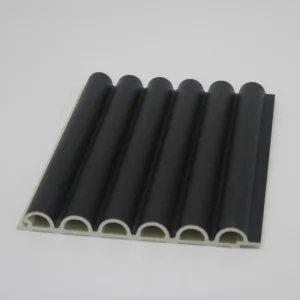
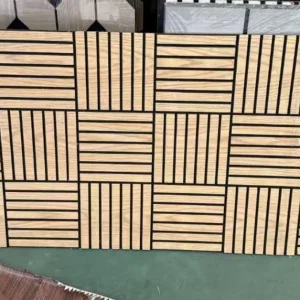
WPC Grating & Louver Panels
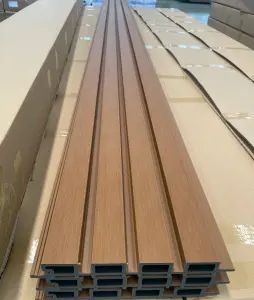
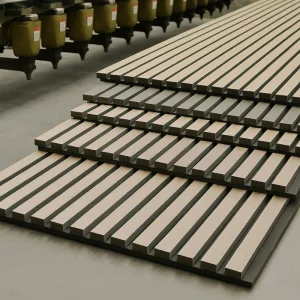
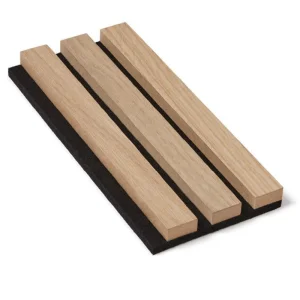
Supported by 120 fully automated extrusion lines yielding 12 million square meters annually. Features deep wood-texture embossing, high structural stiffness, and rapid interlocking mechanical joints for interior accent walls and commercial acoustic baffles.
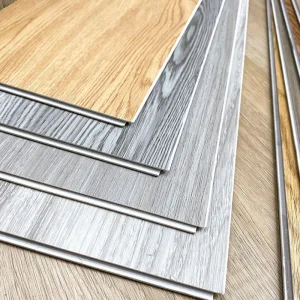
Rigid Core SPC Flooring
Operates 4 high-precision extrusion and lamination lines outputting 3 million square meters annually. Engineered with ultra-dense stone polymer composite core, click-lock joint trimming, and zero-formaldehyde wear layers for high-traffic commercial spaces.
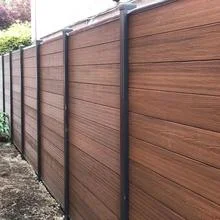
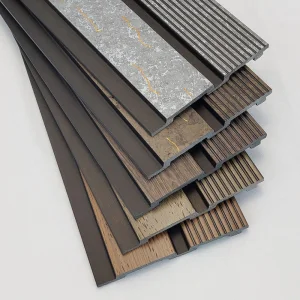
Outdoor WPC Wall Cladding & Decking
Utilizes 40 customized heavy-duty extrusion lines with 2 million square meters annual capacity. Features co-extruded outer cap layers offering UV-stabilized protection against extreme sub-zero or high-temperature weathering.
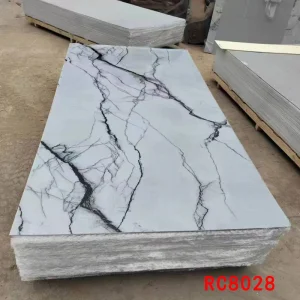
UV Marble Sheets & PVC Panels
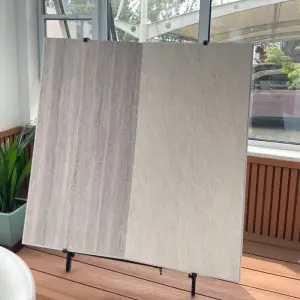
Driven by 12 specialized UV coating lines operating in Class 10,000 dust-free workshops. Delivers mirror-finish high-gloss stone textures with scratch-resistant, flame-retardant surface treatments.
Bamboo Charcoal Wood Veneers
Combines micro-porous bamboo charcoal technology for indoor moisture absorption, active odor degradation, and bendable thermal-forming properties suitable for curved architectural columns.
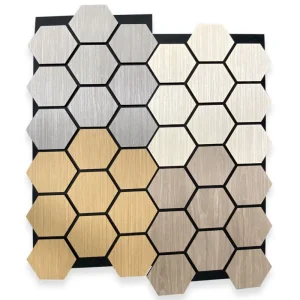
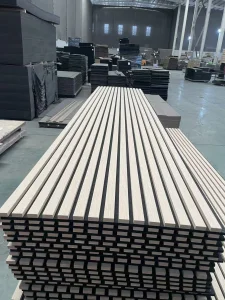
Acoustic Slat Wood Panels
Precision CNC-cut MDF/WPC slats mounted on high-density recycled PET sound-absorbing felt. Optimized for reverberation control in recording studios, auditoriums, and luxury hospitality projects.
4. China Factory Advantages: Macro Economics, OEM Customization & R&D Integration
Why do leading international distributors, commercial contractors, and hardware brands source directly from Chinese WPC factories? The competitive edge stems from an integrated industrial supply chain network that seamlessly links raw material chemical processing, precision tooling production, profile extrusion, and custom surface finishing.
4.1 Complete Supply Chain Integration in Shandong Hub
Located in Linyi, Shandong, our factory benefits from immediate proximity to key raw material suppliers—including bulk PVC resins, PE polymers, eco-friendly stabilizers, titanium dioxide ($TiO_2$), and organic wood flour processing units. This localized ecosystem reduces raw material transit times, minimizes procurement overheads, and grants direct access to China's leading CNC tool cutting manufacturers.
4.2 Advanced OEM & ODM Custom Milling Capabilities
Through our state-of-the-art tooling workshop, Linyi Rich New Materials provides end-to-end custom mold creation and profile cutting services:
- Custom Profile Extrusion Dies: In-house wire-EDM cutting and CNC machining of multi-cavity extrusion dies within 15 days.
- Intricate Surface Grooving: Automated high-speed multi-head routing to cut complex semicircular, fluted, or acoustic slot patterns into extruded profiles.
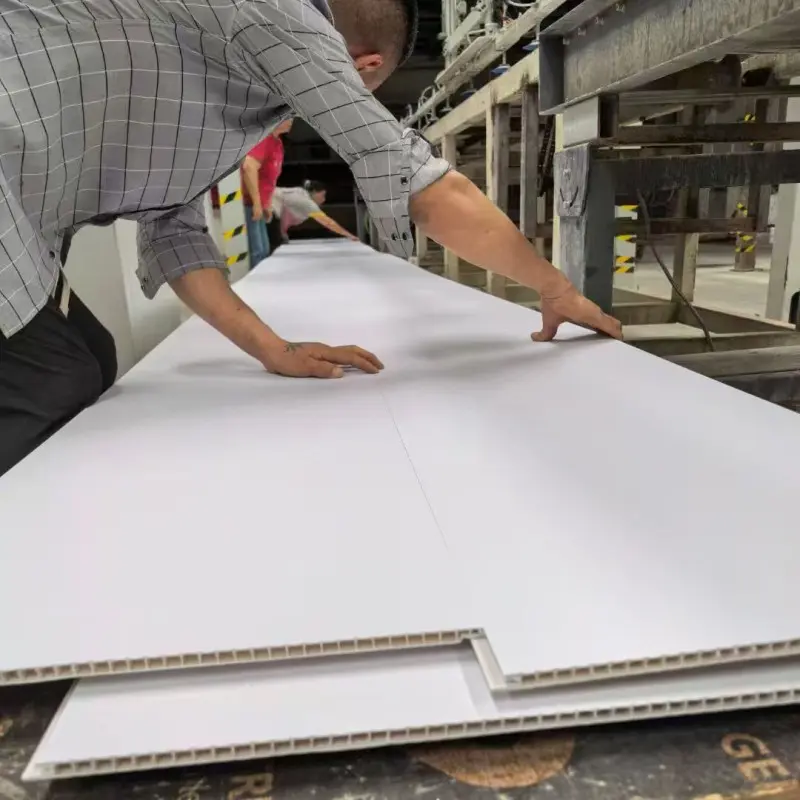
- Precision Length Cut-to-Size: Automated inline secondary cut-off machinery allows custom packaging of exact project-length profiles (e.g., 2.8m, 2.9m, 5.8m for optimal container loading).
5. Localized Architectural Application Scenarios & Global Procurement Requirements
The multi-faceted physical properties of WPC materials allow them to serve diverse commercial, residential, and industrial applications across varying climatic zones:
5.1 Commercial Architectural Interiors & Hospitality
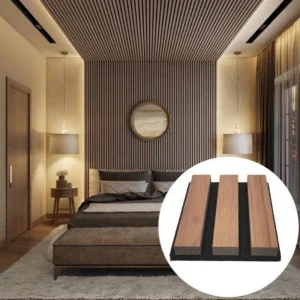
In luxury hotels, corporate offices, and shopping malls, WPC indoor wall panels and PS decorative profiles provide rich tactile aesthetics while eliminating wall dampness and maintenance overheads. Precision cutter finishing guarantees seamless tongue-and-groove click joints, eliminating visible seams during installation.
5.2 Extreme Outdoor Climate Resistance
Our outdoor WPC wall cladding and composite decking are formulated specifically to withstand thermal cycling ($-40^\circ\text{C}$ to $+60^\circ\text{C}$), torrential rainfall, intense UV radiation, and insect damage. The material features an ultra-low linear thermal expansion coefficient ($<0.04\text{ mm/m}^\circ\text{C}$), preventing structural warping or joint popping over decades of service.
5.3 Global Procurement Standards & Regulatory Compliance
International buyers require absolute assurance regarding product safety and environmental compliance. All products manufactured by Linyi Rich New Materials Co., Ltd. undergo rigorous testing protocols to meet global benchmark certifications:
- ISO 9001 Quality Management System: Comprehensive traceability from raw material batch inspection to final carton cutting tolerances.
- Fire Retardancy Compliance: Meets ASTM E84 Class A and EN 13501-1 B-s1, d0 flame-spread requirements for interior ceiling and cladding installations.
- Environmental Safety: Certified zero-formaldehyde emission (E0/EN 717-1 standard) and REACH / RoHS compliance for toxic heavy metals and phthalates.
6. Industry Trends & Next-Generation Smart Manufacturing Innovations
As the WPC profile industry moves toward Industry 4.0 standards, several key trends are reshaping cutter technologies and manufacturing workflows:
- AI-Guided Optical Quality Control Cutters: Automated high-resolution machine vision cameras scan extruded profiles in real-time, detecting surface blemishes, micro-cracks, or color variations, automatically triggering the inline cutter to reject defective segments without stopping the extruder.
- Ultra-Lightweight Micro-Foamed WPC Profiles: Advanced chemical foaming agents reduce profile density by up to 30% while retaining structural rigidity, lowering shipping costs and facilitating easier manual cutting on job sites.
- Closed-Loop Circular Recycling Systems: Off-cut waste generated during edge-trimming and sizing is immediately collected, pulverized, re-granulated, and fed back into the extrusion line, achieving near-zero raw material wastage.
7. Technical & Procurement FAQ (Frequently Asked Questions)
In-depth answers to technical questions concerning WPC cutting equipment, blade maintenance, profile specifications, and factory ordering procedures.