Explore our factory-direct wood-plastic composites engineered for severe climate endurance, zero-maintenance aesthetics, and structural precision.
The global perimeter security and outdoor privacy industry is undergoing an unprecedented transformation. Traditional materials—such as pressure-treated timber, wrought iron, and virgin PVC—are rapidly being superseded by advanced Wood-Plastic Composite (WPC) fencing systems. Driven by stringent municipal environmental mandates, rising labor costs associated with ongoing maintenance, and the demand for higher structural resilience, modern architecture requires material formulations that deliver both biophilic aesthetics and high-performance engineering durability.
Modern WPC fence panels manufactured in China represent the pinnacle of material science in co-extrusion technology. By combining high-density polyethylene (HDPE) thermoplastics with refined hardwood fiber micro-particles and specialized UV-stabilizer packages, modern composite fencing achieves superior flexural modulus, non-hygroscopic performance, and absolute resistance to biological decay, termites, and severe atmospheric corrosion.
| Performance Metric | Traditional Timber Fencing | Standard PVC Fencing | Co-Extruded Modern WPC Fence |
|---|---|---|---|
| Service Lifespan | 5 – 10 Years | 10 – 15 Years | 25 – 30+ Years |
| Maintenance Cycle | Annual Staining/Painting | Occasional Washing | Zero Maintenance (Water Rinse) |
| UV & Fade Resistance | Poor (Cracks & Bleaches) | Moderate (Yellowing Risk) | Grade 4-5 (ISO 105-B02 Tested) |
| Hygroscopic Expansion | High Swelling (15-25%) | Negligible | < 0.5% Absorption Rate |
| Wind Load Resistance | Variable / Splitting | Low (Brittle under Cold) | Category 12 Hurricane Rated (Alu-Reinforced) |
| Environmental Footprint | Deforestation / Chemical Treatments | Petroleum-derived non-recyclable | 95% Recycled Content / 100% Recyclable |
Headquartered in Linyi City, Shandong Province—China's primary timber and polymer composite manufacturing hub—Linyi Rich New Materials Co., Ltd. operates as a vertically integrated industrial titan.
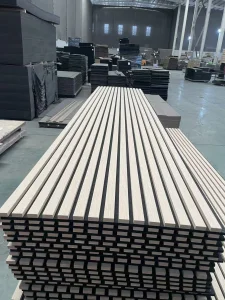
With over 120 automated WPC grating lines and 40 specialized continuous high-pressure outdoor extrusion systems, our plant yields an annual output of 2 million square meters of outdoor wall panels, decking, and architectural fence profiles. This volume guarantees uninterrupted OEM/ODM fulfillment even during peak global building cycles.
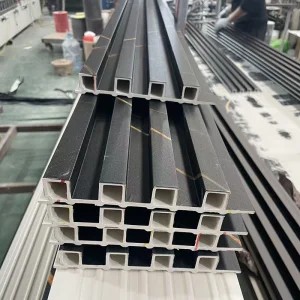
Utilizing multi-cavity high-precision extrusion dies with integrated cooling calibrators, we produce ultra-tight dimensional tolerances (±0.5mm profile consistency). Our mold inventory includes over 200 custom section profiles catering to tongue-and-groove, louvered, co-extruded 3D wood grain, and aluminum post-integrated privacy systems.
In-house laboratory verification processes monitor melt flow index (MFI), density metrics, impact toughness (Charpy test > 5 kJ/m²), boiling water immersion stability, and accelerated weathering chambers (ASTM G154 3,000-hour UV exposure without chalking or cracking).
Unlike first-generation mono-extruded composite slates which were susceptible to oil staining and surface micro-scratching, modern WPC fence panels feature an advanced 360-degree co-extruded shield. This outer polymer sheath incorporates specialized modified engineering plastics that encapsulate the internal core completely.
This protective layer ensures stain resistance (wine, oil, grease, acid rain wipe clean without residual marks), scratch resistance against domestic pets and garden equipment, and absolute color fastness across decades of sun exposure.
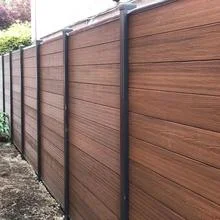
Modern WPC fence installations utilize anodized or powder-coated 6063-T5 structural aluminum posts and rail channels. Composite fence boards slot seamlessly into aluminum post grooves equipped with EPDM rubber gaskets.
This hybrid engineering guarantees zero thermal warping, accommodates natural linear expansion/contraction without structural buckling, and easily achieves compliance with European EN 1991-1-4 wind loading parameters for coastal installations.
Procuring exterior building products internationally requires rigorous adherence to regional building codes, environmental certifications, and customized logistics management.
Our modern WPC fencing range complies with ISO9001 (Quality Management), ISO14001 (Environmental), CE Marking under EN 15534-1/4, REACH chemical safety regulations, and Intertek/SGS fire rating classifications (Class Bfl-s1 / ASTM E84 Class B).
We adapt fence board thicknesses (10mm, 18mm, 20mm, 21mm), width profiles (150mm to 300mm), and lengths (1.8m standard European modules, 6ft / 8ft North American modules) to eliminate on-site cutting waste for contractors.
Full private-label packaging, barcoding, branded protective films, installation instruction sheets translated into 12 languages, and custom hardware accessories bundled directly at factory source.
High-density pallet packing designed for maximum 40ft HQ container cubic utilization, reducing overseas freight cost per linear meter of fencing by up to 18%.
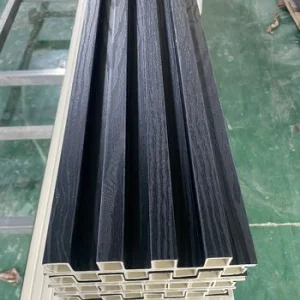
Modern WPC fence panels provide seamless full-privacy or semi-privacy louver designs for luxury suburban communities. The deep dual-tone 3D embossed wood grain finishes (Teak, Walnut, Charcoal, Oak) perfectly blend with modern architectural facades without requiring tedious seasonal painting or sealing.
Ideal for beachfront hotels, swimming pool enclosures, and luxury eco-resorts. Modern composite fencing withstands salt-spray marine degradation, high air humidity, and chlorinated pool splash-back without rotting, rusting, or flaking.
Engineered tongue-and-groove dense WPC profiles function exceptionally as environmental sound insulation walls along suburban highways, commercial loading bays, and municipal parks, dampening ambient noise decibels effectively.
The next decade of modern WPC fence development will be anchored by two main vectors: Deep Decarbonization and Functional Smart Integration. As global ESG criteria tighten for commercial real estate developers, China's leading WPC suppliers are pioneering carbon-neutral extrusion techniques.
Linyi Rich New Materials continues to increase the proportion of post-consumer recycled HDPE and reclaimed timber offcuts in raw material blending. By diverting thousands of tons of plastic scrap from landfills annually, our modern WPC fence formulations deliver up to 65% lower embodied carbon footprints than traditional virgin aluminum or steel fencing.
Emerging architectural trends involve integrating micro-solar PV capping ledges directly onto WPC fence posts, powering low-voltage LED pathway lighting, smart security motion sensors, and automated gate locks without requiring invasive subterranean electrical trenching.
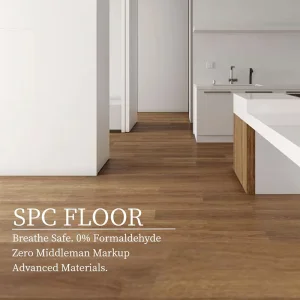
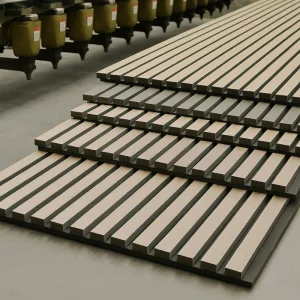
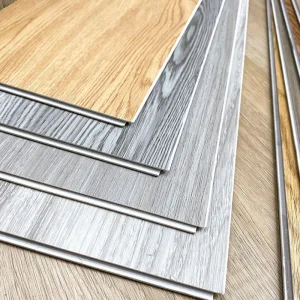
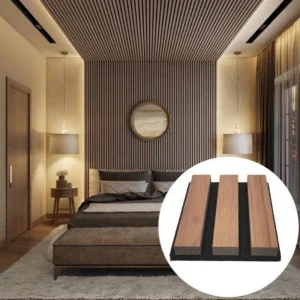
Complement your fencing project with our extensive range of indoor/outdoor wall panels, acoustic treatments, and resilient SPC flooring options.
 Rich New Materials